
Europe Ordered Tether Off Its Exchanges. It Can't Order It Out of Wallets.
Onuora Amobi ·
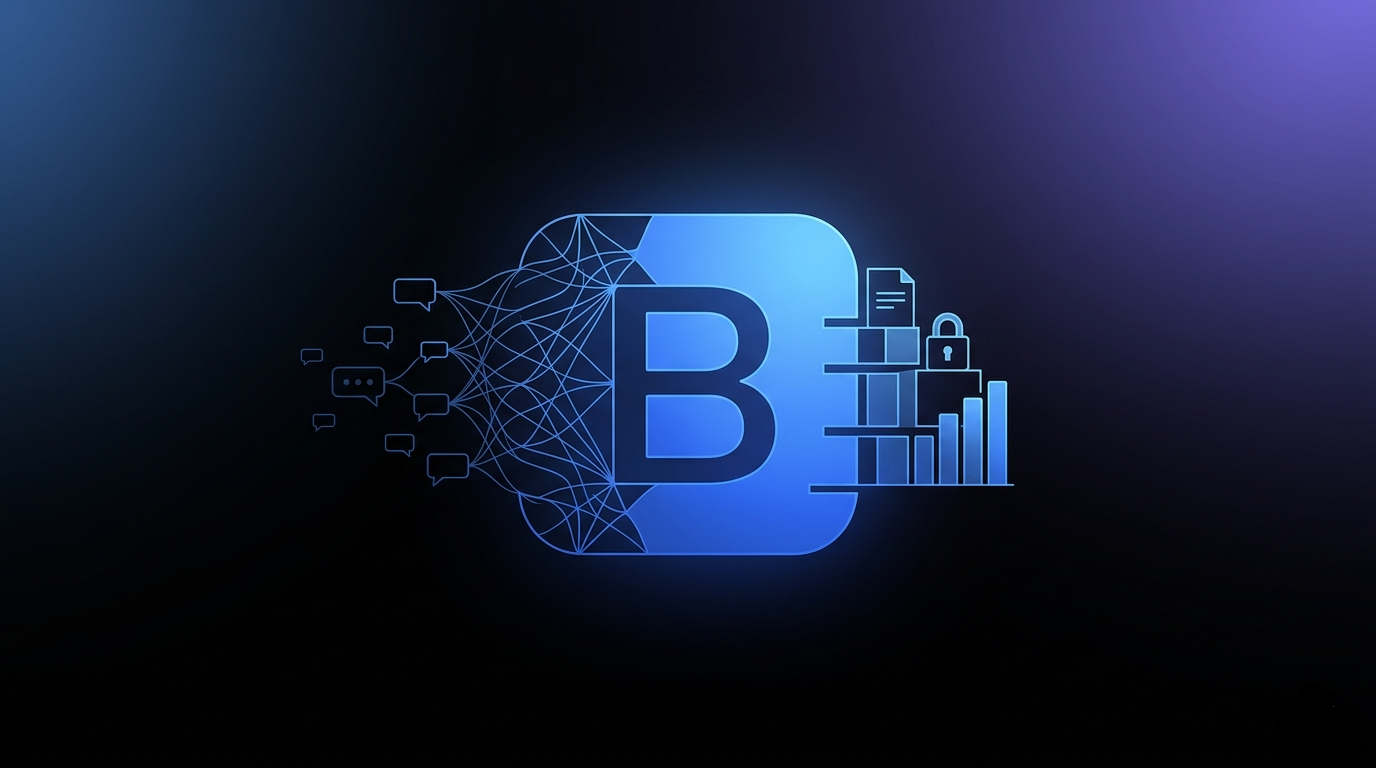
Coinbase shipped Base MCP today. Every headline framed it as "AI can now manage your crypto." That framing is wrong, or at least small. The actual story is who controls the layer of abstraction between users and on-chain protocols — and Base just dissolved that layer for itself.
When the user never sees the interface, the interface stops being a moat. What's left? Whatever signals your protocol broadcasts that a machine can verify without asking permission.
Base MCP is a gateway that connects a Base Account to AI clients — Claude, ChatGPT, Cursor — using the Model Context Protocol, the open standard Anthropic published in 2024. Through it, an agent can read your wallet, swap tokens, send funds, look up history, and route into DeFi protocols using natural language.
At launch, the integrations are real: Uniswap, Morpho, Moonwell, Avantis, Aerodrome, Virtuals, and Bankr. Lending, swaps, perpetuals, agent launches. Lincoln Murr, who runs AI product at Coinbase, described MCPs to Fortune as "like a nice wrapper" atop APIs — a way for agents to query and act without rigid API contracts. Symplexia Labs
Coinbase says private keys stay outside the MCP server. Every transaction sits as a pending approval until the user signs in their Base Account. So no, ChatGPT cannot drain your wallet while you sleep. Yet.
For ten years, DeFi protocols invested in design, micro-animations, and branded onboarding flows. Aerodrome's dashboard. Uniswap's swap card. Morpho's risk panels. All of it was a moat — sort of. Users formed habits. Habits became defaults. Defaults became liquidity.
Strip the interface away and what does an agent actually consume? Smart contract endpoints. Liquidity depth. Fee structures. Audit history. The protocols that built brand through visual polish just discovered that polish is invisible to the new buyer.
The new buyer is a model. The model doesn't care if your gradient is on-trend. It cares whether your data answers its question fast and truthfully.
Here's the second-order effect almost no one is naming yet: when agents pick the trade, agents need inputs they can verify on-chain. Marketing copy doesn't work on Claude. A nice Twitter thread doesn't move a model.
So what matters?
Whether your token's liquidity is locked. Whether your team's vesting schedule is public, immutable, and machine-readable. Whether your audit is on-chain or hand-waved in a PDF. Whether your launch was structured through an accountable system or assembled in a Telegram group.
The protocols that built around on-chain transparency are now the only ones an agent can safely route into. Team Finance has been doing exactly that — locking and verifying tokens since 2021, with billions in liquidity and team allocations sitting in cryptographically auditable vesting contracts. The TrustSwap Launchpad vetting framework was already pointed at the same problem before any of this was urgent, and Swappable's verified asset rails extend the same logic to NFTs and digital goods. Token locks and vesting commitments aren't marketing claims when they're on-chain primitives. An agent can read them. An agent can act on them.
That's the moat now. Not the website.
The reflexive read is that mobile DeFi dies if agents do everything. Wrong direction. Mobile becomes more important, just narrower in function.
If your agent is initiating swaps on your behalf in a desktop chat window, you still need an approval surface in your pocket. You still need real-time visibility into what positions exist, what just moved, and what your agent committed to. Portfolio tracking and approval — not protocol navigation — become the mobile use case.
Apps like The Crypto App sit closer to this future than the swap-first wallets that defined the last cycle. The phone stops being the trading interface. It becomes the audit trail and the kill switch.
Coinbase is being deliberate. Transactions require manual approval. Private keys stay siloed. There's no autonomous pre-authorization at launch.
The reason for the discipline isn't technical. It's that no one — not the SEC, not the CFTC, not FinCEN, not any G7 securities regulator — has answered the question of what happens when an AI agent executes a trade and the trade goes wrong.
Is the agent the broker? Is the model provider the broker? Is the user, who clicked "approve" on something they didn't fully understand, still the executing party? When a model recommends a swap into a token that later turns out to be a security, who gets the Wells notice?
These aren't hypotheticals. They're the dominant policy debate in Washington and Brussels right now, and Coinbase shipping Base MCP today moves them from theoretical to immediate. Expect the first formal guidance — or the first enforcement action that becomes guidance — within twelve months.
Base MCP is paired with Coinbase's x402 payment standard — the dormant HTTP status code Coinbase resurrected in 2025 for agent-native micropayments. Read together, the two products describe a system where AI agents pay for services, hold balances, route through DeFi, and settle commerce, all on Base.
This isn't a feature launch. It's a bid to make Base the default settlement layer of the agentic web. If agents become a meaningful share of on-chain volume within the next eighteen months — which is the bet — every L2 that doesn't have an MCP gateway is suddenly invisible to the new buyer.
Expect Arbitrum, Optimism, Polygon, and Solana to ship comparable gateways within the quarter. The infrastructure race for 2026 is no longer "which chain is fastest" or "which has lowest fees." It's which chain is most legible to a model that has never read your docs.
The most important sentence in Coinbase's announcement was easy to miss: "Unlike siloed agentic wallets that only live in a terminal", the Base Account moves with you. Translation: Coinbase is betting that the wallet, not the chat client, is the durable abstraction. The chat interface is interchangeable. Today it's Claude. Tomorrow it's something else. The account is what persists. Fortune
If that bet is right, then every protocol that survives the next cycle is going to be the one that made itself most legible to whatever model happens to be in front of the user that month. Branding becomes irrelevant. Audits become source code. Locks become liquidity guarantees.
The question worth sitting with: in a market where the buyer is a machine, what stops the entire industry from being graded on a single rubric — verifiable trust per dollar of TVL? And what happens to the protocols that score badly when the grader never sleeps?
Onuora Amobi ·

Onuora Amobi ·

Onuora Amobi ·

Onuora Amobi ·

Onuora Amobi ·

Onuora Amobi ·