
Strategy Paid $80,318 a Bitcoin for Coins Worth $77,800
Onuora Amobi ·
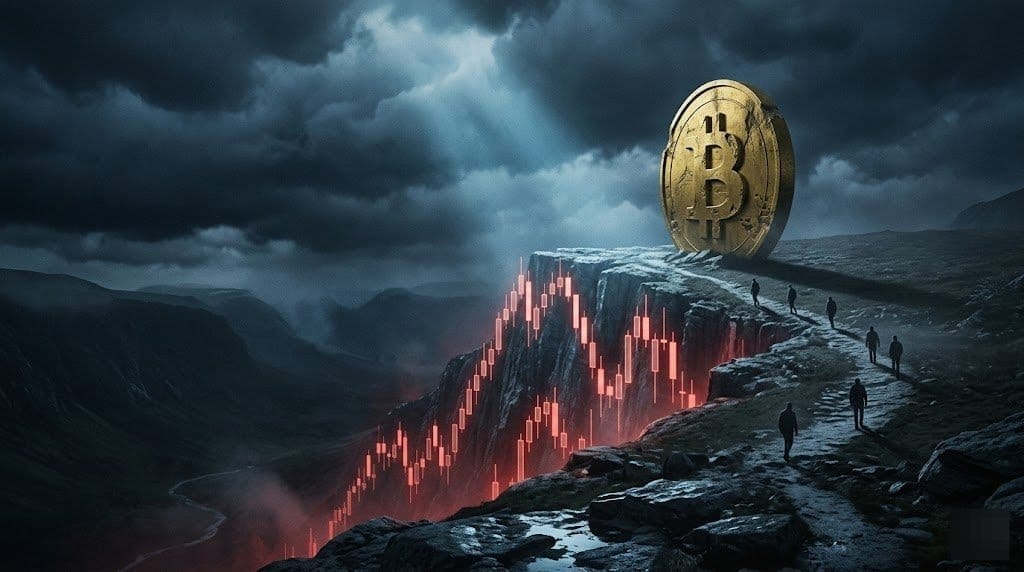
A market that only ever goes up never finds out who actually believes in it. June supplied the test. The Crypto Fear and Greed Index collapsed to 11 — deep in extreme fear — on 3 June, with Bitcoin trading near $65,853, roughly 47% below its 2025 peak above $126,000. The number on the screen is ugly. What it reveals is more interesting.
Every cycle, the same thing happens at exactly this moment. The tourists leave.
Bull markets are crowded with people who were never there for the technology. They came for the line going up, and they treated a volatile asset as a savings account that paid better. A 47% retrace is the bill for that confusion arriving all at once.
The flows make the exodus legible. Spot Bitcoin ETFs posted their longest outflow streak since their 2024 launch — thirteen straight trading days from 15 May to 3 June, shedding about $4.33 billion, roughly 59,400 BTC. That is not panic selling by degens. That is allocators trimming a position that stopped being comfortable, through the most institutional wrapper crypto has.
The ETF was supposed to bring in patient money. It also brought in money that can leave on a Tuesday.
The sharpest single day captured it. Bitcoin's slide triggered around $1.8 billion in liquidations in twenty-four hours, the largest since February, with long positions accounting for the bulk. A notable sale by Strategy, the corporate balance sheet that spent years as a reliable buyer, added to the pressure.
Liquidations are not the market thinking. They are the market being margin-called. Every one of them is a position that was sized for a world where price only rose. When that cohort gets flushed, the asset is left in steadier hands, even if it doesn't feel like progress at the time.
Price never moves in a vacuum, and the backdrop turned against risk at the worst possible moment. A firmer dollar and higher real yields make a non-yielding asset like Bitcoin a harder hold for a professional allocator — the opportunity cost of owning something that pays nothing rises every time safe paper pays more. Layer that onto a crowded, over-extended long and you get the kind of unwind June delivered.
The scale of the institutional retreat was its own story. Beyond the thirteen-day streak, Bitcoin ETFs bled on the order of $8 billion across the trailing month, one of the heaviest stretches of redemptions since the products launched in 2024. That is the patient-money wrapper behaving impatiently.
None of that makes the sell-off irrational. It makes it ordinary. An expected rate cut priced in and then taken away is enough to reprice every long-duration bet at once, and Bitcoin trades like the longest-duration bet there is. The asset didn't break. The assumptions stacked on top of it did.
The pattern rhymes every cycle because the buyer mix changes on the way up. Near a high, the marginal holder is the most recent one — highest cost basis, weakest conviction, quickest to fold. They bought a number, not a thesis. So the same euphoria that prints the top also stocks the market with the exact holders most likely to sell into the first real drawdown.
The unwind isn't a malfunction. It's the crowd that arrived last leaving first. Which is why the fear reading is less a forecast than a headcount. Eleven on the index doesn't tell you where price goes next. It tells you how many people just discovered they were never investors.
Here is the part the red candle hides. Underneath the drawdown, the boring work continued. Dollars kept moving on-chain. DeFi kept clearing. Builders kept shipping into a market that had stopped paying attention, which is historically the best time to ship.
This is the difference between price and adoption. Price is a vote count taken hourly, dominated by whoever is most emotional that day. Adoption is whether the rails get used when nobody is cheering. The two diverge hardest precisely at a reading of 11.
None of this is a claim that the bottom is in. It might not be. Sentiment can stay broken for a long time, and early signs of positive ETF flows returning around 23 June are a flicker, not a trend. Anyone telling you a fear index guarantees a reversal is selling something.
But extreme fear is a clean filter for one decision: whether you are building a business or renting a number. The renters are already gone — that's what the outflows are. The builders are the ones who treat a 47% drawdown as an operating condition rather than an identity crisis. Locked liquidity, honest token structures and treasuries that were stress-tested for exactly this still function at a fear reading of 11. The conviction that survives this tape is the only kind worth having, and tools that prove commitment — like the on-chain locks behind Team Finance — matter most precisely when sentiment offers no comfort.
Volatility is the price of admission to an asset that reprices the future in real time. The people leaving this month were never going to pay it. The ones who stay get a quieter market, cheaper capital, and far less competition for attention than they had at $126,000.
The tourists came for the view. The residents came to build. A drawdown is just the season when you find out which one you are.
Onuora Amobi ·

Onuora Amobi ·

Onuora Amobi ·
Onuora Amobi ·

Onuora Amobi ·

Onuora Amobi ·