Railway's Hackers Were Hunting AI Keys. Only the Crypto Wallets Couldn't Get a Refund.
Onuora Amobi ·
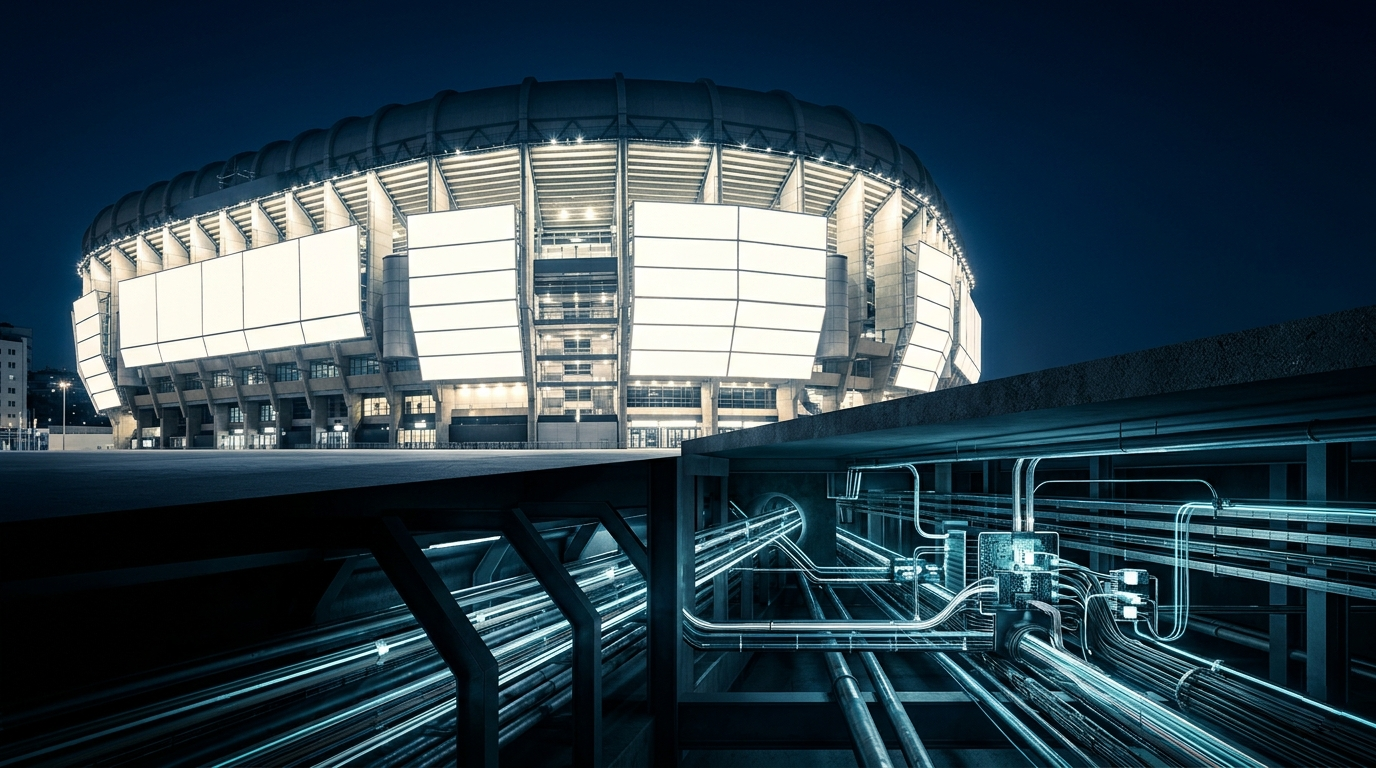
Two crypto deals landed on the FIFA World Cup the same Tuesday, and almost everyone is going to pay attention to the wrong one. The headline-grabber is Kraken becoming the Official Crypto Exchange Supporter of the FIFA World Cup 2026, a tournament projected to reach more than six billion people across 48 teams and 104 matches. The one that actually matters got a tenth of the coverage. It involves Chainlink, and FIFA isn't even directly part of it.
That gap — between the deal you saw and the deal you didn't — is the whole story of where crypto adoption is really happening. One side is buying eyeballs. The other is quietly wiring up the settlement layer.
Strip away the World Cup's scale and Kraken's deal is a brand-awareness play, the same one crypto exchanges have run for years. Fan activations, a countdown concert, product experiences across North America and Europe. The exchange is renting football's audience to introduce strangers to digital assets, building on its existing roster of sponsorships with Tottenham Hotspur, Atlético de Madrid, RB Leipzig, and the Williams F1 team. Terms weren't disclosed. They rarely are when the product being purchased is attention.
None of this is a criticism. Awareness has real value, and Kraken is a decade-old, established platform, not a fly-by-night operator. But we should be honest about what a sponsorship is. It's a banner. Banners come down.
The crypto-meets-sports genre has a body count, and ignoring it would be dishonest. FTX signed a 19-year, $135 million deal for the naming rights to the Miami Heat's arena in 2021. The branding went on the roof, the court, the security staff's polo shirts. Then the company collapsed, and a bankruptcy judge stripped the name off the building within weeks. The plumbing of FTX's actual business turned out to be fraud. The logo was the only thing that worked, right up until it didn't.
So the skeptic's case writes itself. Crypto sponsorships spike at market tops, when exchanges are flush and desperate for legitimacy, and a FIFA deal two days before kickoff smells like exactly that kind of top-tick exuberance. It's a fair worry. Hold onto it.
But the skeptic has to reckon with the other side. When Crypto.com paid a reported $700 million for the Los Angeles arena that now bears its name, critics called it insane — and the company is still standing while its exchange token's active addresses jumped roughly fivefold in the days after the announcement. Not every crypto-sports bet detonates. Some of them work. The honest conclusion is narrower and more useful: a sponsorship can build a brand, but it tells you nothing about whether the underlying machine is sound. The logo is orthogonal to the substance. FTX proved that in the worst way.
Now the quiet one. On the same day, ADI Predictstreet — FIFA's official prediction market partner — named Chainlink its exclusive oracle infrastructure, using the Chainlink Runtime Environment to automate how its sports markets get created, resolved, and settled. Note the structure. Chainlink didn't sign FIFA. It signed the company that signed FIFA. It's a partner of a partner, one rung down the ladder, in the part of the stack where logos don't reach.
And that's precisely why it's the more interesting deal. Prediction markets live or die on settlement. The problem ADI Predictstreet is solving is slow, dispute-prone manual resolution that delays payouts — the kind of friction that turns a casual bettor into a furious one. An oracle that settles a market the instant the final whistle blows, without a human arbiter to argue with, is doing a job that has to keep working long after the trophy's handed out. With record ticket demand already past 150 million requests from more than 200 countries, the scale is real and the failure modes are unforgiving.
Chainlink didn't get there through a marketing budget. It got there by already settling the majority of DeFi and being adopted by Swift, Mastercard, and UBS. Infrastructure earns its way into deals by being the thing that doesn't break. That's a fundamentally different kind of credential than a banner.
Here's the asymmetry that should reframe how you read both announcements. The Kraken banner can vanish in a single bad quarter, the way FTX's did, and the tournament wouldn't skip a beat. Pull the Chainlink integration mid-tournament and the prediction markets stop settling. One is decoration. The other is load-bearing.
This is the quiet truth crypto keeps relearning. The durable value sits in the unglamorous layer that does a specific job, not in the spend that buys recognition. It's the same reason the infrastructure that locks team tokens and enforces vesting — the work Team Finance does in the background of a launch — outlives the marketing campaign wrapped around any given project. Nobody puts "non-custodial vesting contract" on a stadium roof. It just has to work every day, which is exactly why it's still there when the hype moves on.
There's a sharper tension under the celebration, too. Even as FIFA blesses a crypto logo, law enforcement is warning football fans about crypto scams targeting World Cup ticket and merchandise buyers. The same tournament that legitimizes a brand-name exchange is a hunting ground for fake-token operators trading on that exact legitimacy. The logo opens the door; it doesn't vet who walks through it.
And the six billion people Kraken is courting? A meaningful slice will buy their first token during this tournament, then immediately face the problem every new holder hits — where to actually watch what they own as it scatters across chains and apps. That's the moment a tracker like The Crypto App stops being optional, because awareness without the tools to manage what follows just produces confused new buyers, not durable ones. The sponsorship makes the introduction. Something else has to make it stick.
So watch both deals, but weight them correctly. When the final's played and the Kraken banners come down off the host cities, one of these two arrangements will quietly keep running because it's wired into how the thing actually functions. The other will be a line in a marketing recap.
Ask yourself which one you'd rather have built — and then ask why the entire market is staring at the banner.
Onuora Amobi ·
Onuora Amobi ·
Onuora Amobi ·
Onuora Amobi ·
Onuora Amobi ·
Onuora Amobi ·