
MetaMask Is Leaving Ethereum's Parent Company to Become a Bank
Onuora Amobi ·

The story everyone ran with today is that MetaMask now lets an AI agent trade your crypto while you sleep. True. Also the least interesting thing about it. MetaMask launched Agent Wallet on Monday — a self-custodial wallet that lets autonomous software swap tokens, run perpetuals, provide liquidity, and place prediction-market bets across Ethereum-compatible chains and Hyperliquid. The autonomy is the demo. The constraint is the actual product.
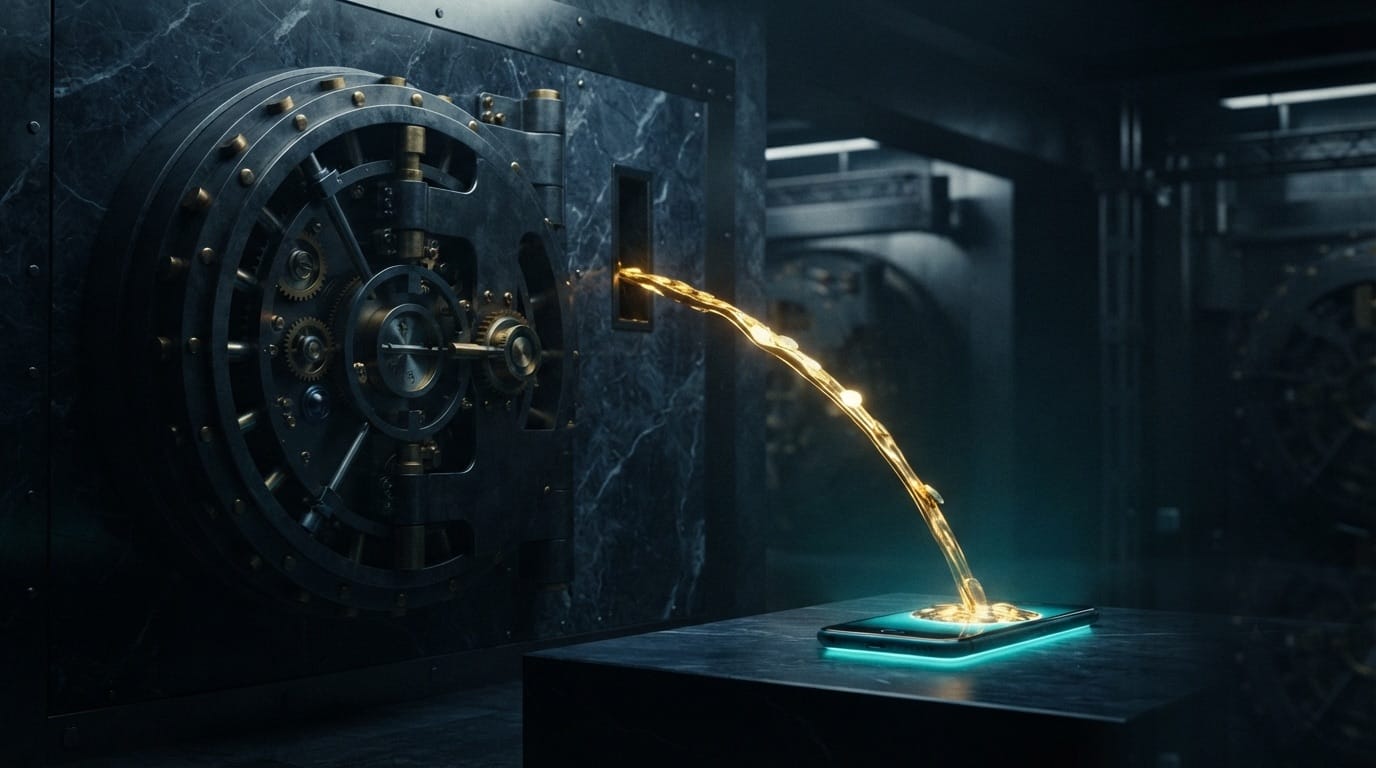
Look at what Consensys shipped. Spending limits. Protocol allowlists. Two-factor approval on anything that falls outside the rules you set. Every transaction simulated, screened by Blockaid, and MEV-protected before it ever reaches a block. And the part most coverage skated past: up to $10,000 a month in transaction-loss coverage on eligible activity. That's not a trading tool. It's a containment system with a trading tool bolted to the front.
MetaMask gave the wallet two settings, and the names are a tell. Guard Mode keeps the agent inside allowlisted protocols and daily caps, pausing for 2FA the moment it steps out of bounds. Beast Mode lets it touch any protocol it likes — and still blocks the transactions it flags as malicious.
You don't build a kill-switch into Beast Mode unless you already know what the beast does when it's hungry.
That's the quiet admission underneath the launch. An autonomous agent with wallet access isn't a smarter trader. It's a faster way to lose everything, because it executes at machine speed and it has no instinct for when a yield farm is actually a honeypot. The whole architecture assumes the agent will, at some point, try to do something catastrophic — through a bad prompt, a poisoned data feed, or a contract that looked fine until it wasn't. MetaMask priced that assumption in and called it a feature.
The agentic-trading pitch always rested on a faulty premise: that the thing holding back AI in DeFi was speed of execution. It wasn't. Bots have front-run humans for years. The bottleneck was trust — specifically, whether you could hand a piece of software your private keys and still sleep.
So the real innovation here isn't that the agent can act. It's that you can revoke. Push notification to your phone, one tap to approve or reject, five minutes before the request auto-declines and the agent gets nothing. MetaMask turned the off-switch into the product and let the autonomy ride shotgun.
And the timing makes the strategy obvious. MetaMask is late. Coinbase shipped Agentic Wallets back in February, keeping keys isolated inside trusted execution environments. MoonPay wired Ledger hardware into human-approved agent transactions in March. When you arrive months after your competitors, you don't win on "we have agents too." You win on "ours won't drain you." Security isn't a bonus feature in this launch. It's the entire differentiation.
Here's why everyone is racing into the same product category at once. The World Economic Forum puts the AI-agent market at $5.4 billion in 2024 and $236 billion by 2034. A growing share of the people transacting onchain soon won't be people at all — they'll be software acting on someone's behalf, trading against other software representing the other side.
Now the darker figure. Gartner projects that by 2028, one in four enterprise breaches will trace back to AI-agent abuse, from external attackers and malicious insiders alike. Put those two numbers in the same sentence and you have the whole thesis: enormous capital flowing through an attack surface nobody has secured. MetaMask is betting the winner of agentic finance is whoever makes the breach survivable, not whoever makes the agent clever.
Give an agent Beast Mode and it can buy into anything. What it cannot do is read a founder's intentions. It can't tell a committed team from an exit-scam wearing a roadmap.
But it can read a lock. On-chain commitments are the one trust signal an autonomous trader can actually verify before it deploys capital, and that's where the unglamorous plumbing earns its place. Team Finance handles exactly that layer — locking team tokens and enforcing vesting schedules in contracts an agent can check, rather than a promise it has to take on faith. Machine-readable trust is about to matter far more than it did when the only readers were humans skimming a Medium post.
There's a second gap the wallet leaves open. MetaMask's notifications confirm individual transactions, but they don't show you the position your agent has quietly assembled across six chains overnight. Approving each trade isn't the same as seeing the whole portfolio. That oversight problem — what did the thing actually do to my money — is where on-chain portfolio tracking like The Crypto App stops being convenience and starts being a safety requirement. You can't govern what you can't see.
Maybe the cage is just maturation, and that's fine. Credit cards came with fraud protection and chargebacks; nobody calls that an admission of failure. Every financial technology grows a layer of guardrails as it scales, and agentic wallets are simply doing it faster because the stakes arrived faster. By that read, MetaMask isn't confessing anything — it's just building the seatbelt before the crash, which is the responsible move.
Fair. But a credit card doesn't independently decide to wire your balance into a contract it misjudged. The agent does. The guardrails on a card are insurance against someone else's bad behavior. The guardrails here are insurance against the product's own core function. That's a different kind of dependency, and it means the cage isn't bolted on — it's load-bearing. Pull it out and what's left is a loaded weapon aimed at the user's own funds.
Gartner already sees where this goes: it expects demand for guardian agents that monitor other agents to become one of the fastest-growing slices of the market. MetaMask just nominated itself as the guard.
So the question worth sitting with isn't whether AI agents will trade your crypto. That fight is over — they will, and roughly 200 people started letting them today. The question is what happens when the watcher and the watched are both autonomous, both fast, and both occasionally wrong. When that day comes, will $10,000 a month look like real protection — or just the number that got everyone comfortable enough to hand over the keys?
Onuora Amobi ·
Onuora Amobi ·

Onuora Amobi ·

Onuora Amobi ·

Onuora Amobi ·

Onuora Amobi ·