Satya Nadella Warns Against an AI Monopoly From Inside One
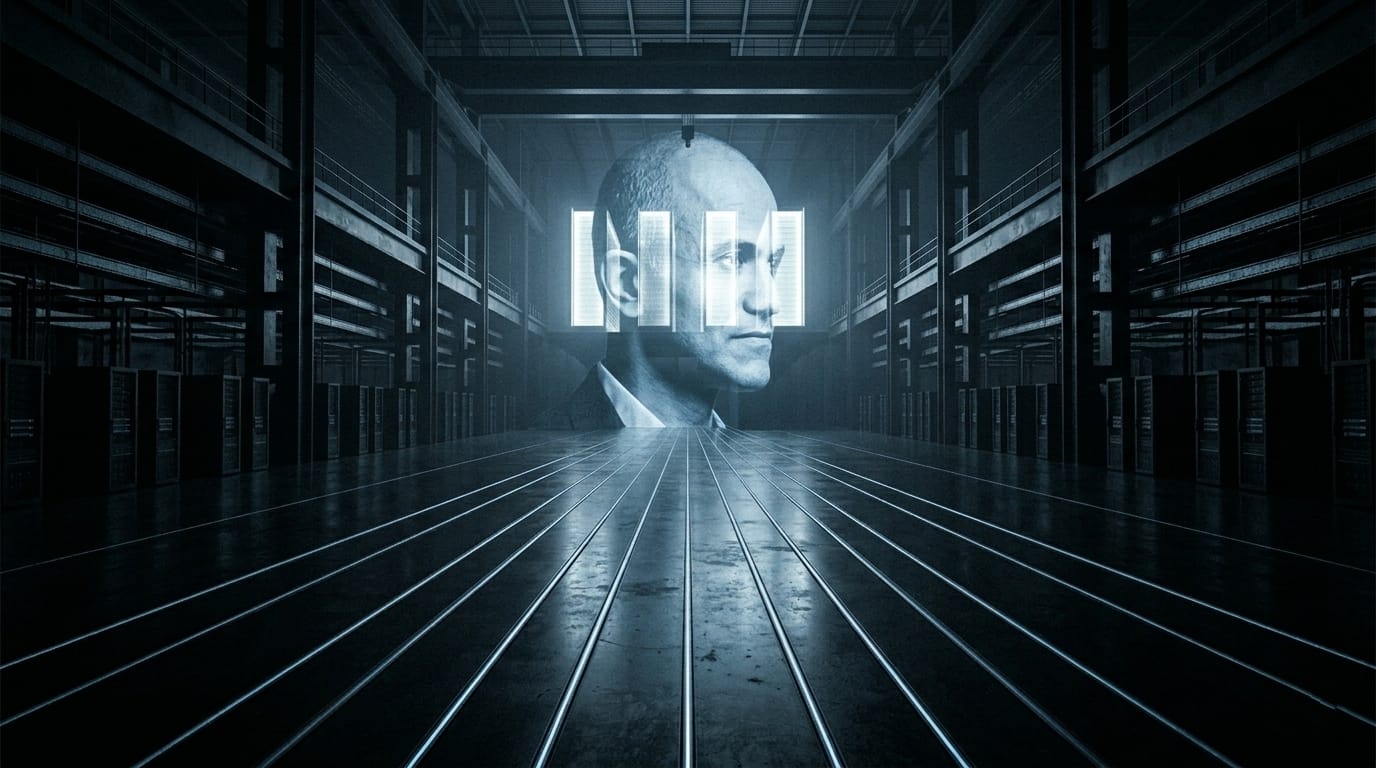
The most shared thing Satya Nadella said this week is a warning about monopoly. It came from the man running one of the four companies that would be the monopoly.
the Nadella posted on X over the weekend that the future to fear is one where every business across every sector quietly hands its value to "a few models that eat everything they see." The political economy, he argued, will not tolerate that. In the same message he pushed companies to guard their intellectual property and to build human capital and what he called token capital together — people and machine intelligence sharpening each other in a loop, rather than one erasing the other.
Smart framing. Also, conveniently, a framing that points the demand straight back at Microsoft.
The globalization tell
Nadella reached for an analogy that does a lot of quiet work. He compared this moment to the first wave of globalization: headline GDP climbed while specific towns got gutted. The aggregate looked like progress. The factory floor that went dark did not.
It's an honest comparison, and a revealing one. Outsourcing genuinely lifted global output, and a small number of firms captured most of what it produced, while the displacement landed on everyone else.
Now run it forward. If three or four foundation models become the layer every company rents its thinking from, the value collects at the top, and everyone downstream turns into a tenant — paying rent, owning nothing. That's a real risk. Nadella describes it well.
He just leaves out where he's standing.
He's playing catch-up, and he knows it
Microsoft is one of the few. It isn't a bystander shouting about concentration from the cheap seats. Two weeks ago at the company's Build conference, Nadella declared an "agent-native stack" and a new paradigm — a pitch built to remind everyone that Microsoft still sits near the center of this thing. The subtext was defensive. After an early lead through OpenAI, the company now trails a crowded front that includes Google, Anthropic, Meta, and SpaceX.
So the warning and the business plan rhyme. Build agents you control and keep your data — and, naturally, do it on Microsoft's rails rather than by renting a single rival's model. The advice is sound. It also happens to sell Copilot and Azure.
Watch what the company does next to the words. Late last year Nadella called data centers the real bottleneck — "token factories," he said, were the constraint, not customer demand — right after Microsoft committed to a $35 billion arrangement with Anthropic. The man warning against a few players hoarding the future is spending tens of billions to make sure Microsoft is one of them.
And the human cost isn't abstract for this firm. Microsoft cut more than 15,000 jobs in 2025 while posting record profit, with AI named in the same breath. Months later Nadella was on his blog asking us to stop calling AI "slop" and start seeing it as "bicycles for the mind." Both things can be true. The line still lands differently depending on whether you kept your seat.
The steelman
Give him the strongest version of the case, because it holds up.
Concentration in a handful of frontier models is the most plausible bad ending here, and almost nobody with Nadella's platform says so this plainly. His message — own your capital, don't rent your brain — is good counsel for any company that doesn't want to wake up as a thin wrapper over someone else's model. And the doom story he's pushing against is, so far, overstated. Vanguard's 2026 forecast found that the occupations most exposed to AI are seeing faster job and wage growth, not collapse. Scaffolding, not substitute. At least for now.
So the next time a technology CEO warns you about a future controlled by a few giants, ask one question first. Is he describing a danger — or describing himself, and hoping you won't notice the difference?