Hong Kong Isn't Building a Crypto Hub. It's Tokenizing Its Own Balance Sheet.
Onuora Amobi ·
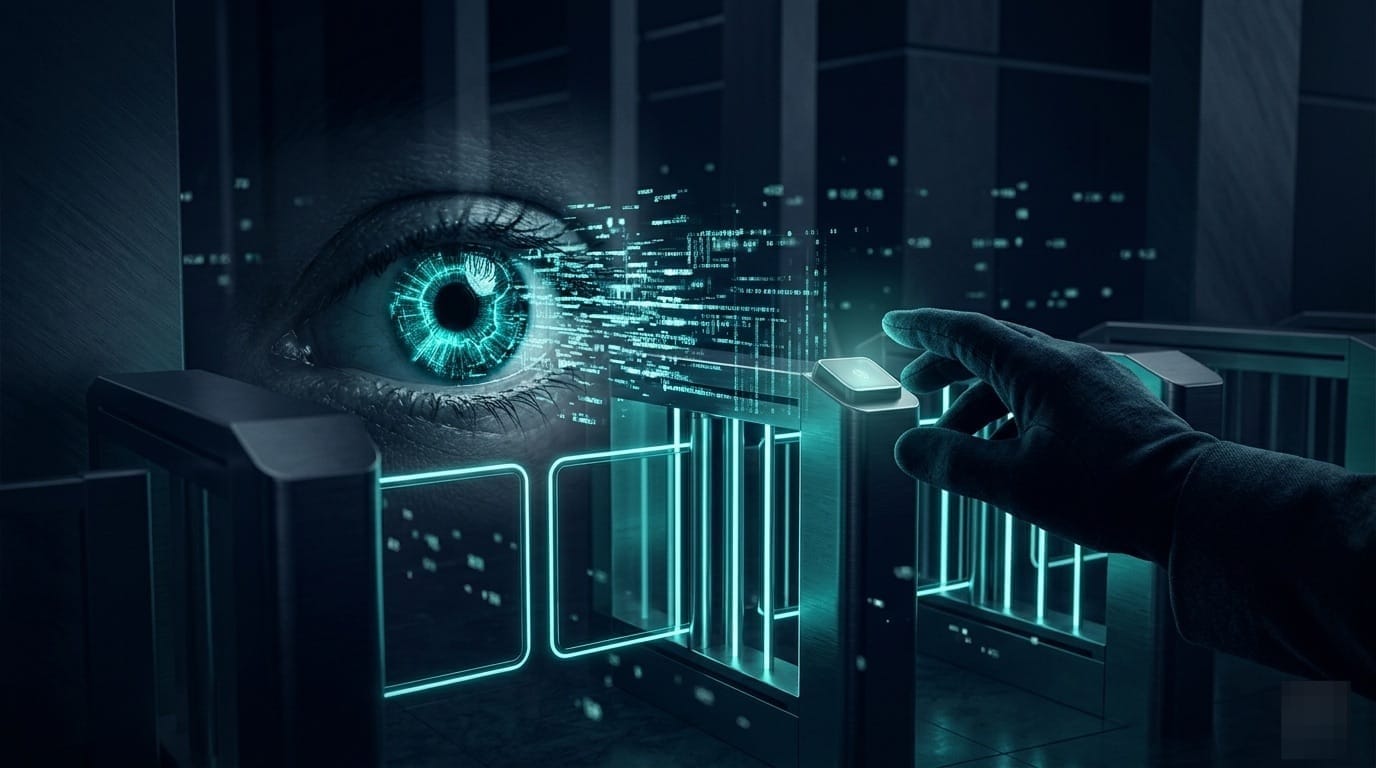
The most valuable thing online is no longer your attention. It's proof that you exist at all.
That shift is what makes proof of human suddenly worth money. As AI floods every comment section, dating app, and signup form with convincing fakes, the ability to confirm a real person sits behind an account has gone from a nice-to-have to a scarce asset. And the company furthest ahead in selling that confirmation is the one founded by the man who did more than anyone to create the bot problem.
For most of the internet's life, proving humanity was free and bad. CAPTCHAs, SMS codes, email confirmations — every one of them now folds under a competent model. So a market formed around something harder to fake.
World, the project formerly called Worldcoin, just attached a meter to it. The company rolled out a version of World ID that charges developers a fee each time they verify a user as human, turning what was a free credential into a metered service. The pitch to businesses is blunt. You are drowning in synthetic users. We can hand you a cryptographic guarantee that this one breathes.
The credential already plugs into places you'd recognize. World ID verification has been wired into Zoom, Tinder, and other consumer apps, where the goal is to strip out impersonators and AI-generated profiles before they reach you. A dating match that proves it's a person. A video call where every face is attested. Small features, enormous implications.
There's a strange symmetry here. Altman runs OpenAI, whose models are precisely why the web can no longer tell people from programs. He also co-founded the network now positioned to sell the cure.
The mechanism is an iris scan. A chrome sphere called the Orb photographs your eye, converts it to a number, and issues a credential that proves you're a unique human without storing your name. The latest Orb runs NVIDIA Jetson processors with visible-light and infrared sensors, with assembly underway in Richardson, Texas. It's a long way from a CAPTCHA asking you to find the traffic lights.
The reach is no longer trivial. The network reports more than 26 million users worldwide, including 12.5 million who hold Orb-verified World IDs. After years stuck in regulatory limbo, the project launched in the United States on May 1, opening in San Francisco, Los Angeles, Miami, Atlanta, Austin, and Nashville, with thousands of Orbs slated to roll out over the following two years. To bankroll that expansion, the World Foundation raised $135 million aimed squarely at the US market.
The business model flipped, and that flip is the real story.
World started by paying people. Get scanned, receive free WLD tokens, build a user base through giveaways. That worked to seed millions of signups, but giveaways don't make a company. Charging for verification does.
Markets noticed the pivot. WLD surged more than 120% from late-May lows near $0.27 to trade around $0.59 to $0.67 by mid-June, as traders repriced the token from a curiosity into something with a revenue thesis behind it. Institutional money showed up too. One public company, Eightco Holdings, accumulated roughly 8.4% of the circulating WLD supply, a position worth hundreds of millions of dollars, betting that proof of human becomes a fee-generating utility rather than an airdrop.
Whether the token deserves that move is a separate question from whether the service is useful. A network can sell something valuable while its token swings on speculation. The honest read is that demand for human verification is real and rising, and the price WLD should carry for it remains a guess.
Here's the twist that complicates the clean "humans good, bots bad" framing.
The same network that sells proof you're a person now wants to vouch for your software. World expanded a framework that lets a verified human connect an AI agent to their identity, so the agent can act online while proving it works for one real person. The bot doesn't pretend to be human. It carries a signed note saying a specific human sent it.
Think about what that solves. When an agent books your travel, buys a limited release, or argues with customer support on your behalf, the merchant on the other side wants to know it isn't a scalping script run by a thousand sockpuppets. A human-attested agent answers that. The line being drawn isn't human versus machine. It's accountable versus anonymous.
That's a more interesting boundary, and a more defensible business. If the future web is half agents, the valuable credential isn't "I am flesh." It's "someone real stands behind this action and can be held responsible for it."
The buyers aren't crypto traders. They're companies bleeding money to fakes.
Every consumer platform now fights a quiet war against synthetic accounts — fake reviews, bot signups, AI-generated dating profiles, fraudulent ad clicks, sybil attacks on token giveaways. Each fake carries a cost: wasted ad spend, poisoned data, churned real users who got burned. Against that math, a few cents to confirm an account belongs to a person starts to look cheap. World has leaned into exactly this calculus, laying out the revenue case for charging apps a per-verification fee and repositioning the whole project around enterprise demand for proof of humanity rather than consumer token rewards.
That repositioning is the tell. A network that once counted success in signups now counts it in verification calls — the same move a free app makes when it discovers an interface worth metering. The product barely changed. The customer did. Instead of paying people to join, World now charges businesses to check them.
The timing isn't arbitrary either. The cost of generating a convincing fake human collapsed at precisely the moment the value of proving a real one spiked. Two curves crossed, and a market opened in the gap between them. Whoever owns the standard for closing that gap owns something closer to a utility than an app — which is exactly why a credential controlled by a single company should make you pause even as the demand for it makes perfect sense.
None of this makes the eyeball scanner comfortable, and the strongest case against World is worth stating plainly.
You are handing your iris — a body part you can't change after a breach — to a private company in exchange for the right to log in. Regulators in several countries have suspended or banned the Orb over privacy and consent concerns, and the worry is legitimate. Biometrics don't reset. A leaked password is an afternoon's annoyance; a leaked permanent identifier is forever. The cryptography is designed so the raw scan never leaves your device and only a proof is stored, but "trust the zero-knowledge math" is a hard sell to someone who just watched a sphere photograph their eye.
There's also concentration risk. Right now the Orb ships from a single distributor, and a verification standard controlled by one company is a single point of failure dressed up as infrastructure. World says it intends to decentralize Orb production and ID issuance to third parties. Until that happens, the antidote to centralized AI runs through a centralized scanner.
So hold both thoughts. The problem is genuine — the web really is losing the ability to tell who's real. The proposed fix is genuinely uncomfortable, and you don't have to accept that the only way to prove you're human is to let a camera memorize your eye.
What's no longer in doubt is the direction. Verifying personhood has become a product with a price, a token, institutional buyers, and a side business in licensing your agents. The free, unverified internet — where anyone could be anyone — is quietly being fenced. The open question is who ends up holding the keys to the gate, and whether you'll have any choice but to pay the toll to walk through it.
Onuora Amobi ·
Onuora Amobi ·
Onuora Amobi ·

Onuora Amobi ·
Onuora Amobi ·
Onuora Amobi ·