
The Launchpad Era Is Over. The Diligence Era Just Started.
Onuora Amobi ·
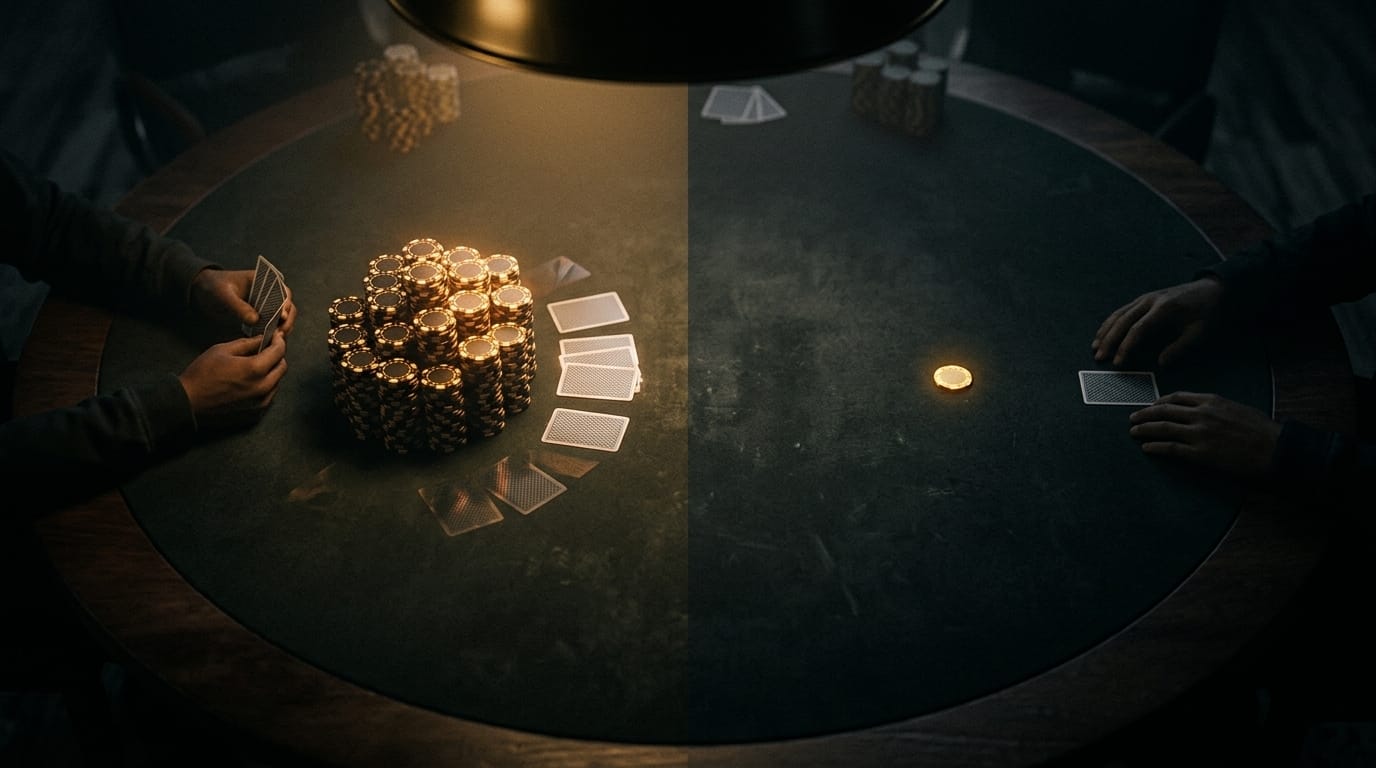
Retail didn't walk away from token sales because they got scared. They walked away because they did the arithmetic and realized the outcome was decided before the buy button ever went live. That's a different problem, and it's a worse one. Fear fades. The belief that a game is rigged does not.
For two cycles, the average participant in a token launch was the exit liquidity, not the early investor. They just didn't have the data to prove it in real time. Now they do, and they've adjusted.
The float was a magic trick, and retail finally caught the method
Start with the setup that defined 2024 and 2025. Projects launched with a tiny slice of supply actually circulating, which manufactured the illusion of scarcity and pushed opening prices far above anything real demand justified. At EthCC, 21Shares researcher Darius Moukhtarzade described how low initial circulating supply inflated launch valuations that bore no relation to actual demand, then collapsed when locked insider allocations hit the market in concentrated waves.
Read that sequence again, because it's the whole con. Retail buys at the inflated open. Insiders wait out their cliff. The unlock arrives, the concentrated selling lands, and the people who bought the story absorb the supply. The most pronounced insider allocations of the year sat in tokens like WLFI, TRUMP, ONDO, ENA, and SUI — large investor and team stakes that eventually had to find a buyer. That buyer was retail, by design.
Even when the setup was fair, the bots got there first
Suppose a project actually structured things honestly. Retail still lost the open, because the open isn't a starting line. It's a race that was already run in the mempool.
Sniper bots scan for new liquidity and buy newly listed tokens milliseconds before a human can react, securing the lowest entry and front-running the public. By the time a normal person sees the token go live and clicks, the price has already moved against them. The "fair launch" they were promised was fair for roughly four hundred milliseconds, all of which belonged to someone running better infrastructure.
So the retail buyer is squeezed from both ends. The cap table is tilted before launch, and the execution is tilted at launch. The wonder isn't that trust collapsed. It's that it lasted as long as it did.
The honest part: not every insider stake is a crime
Here's where the cynical version overreaches, and it's worth being fair. Teams and early backers should hold meaningful allocations — they took the risk when the project was nothing, and a token with no insider skin in the game is its own kind of warning. Vesting exists precisely so those allocations release over time instead of all at once. Bots, for their part, are partly a symptom of open, permissionless mempools, not proof of a specific team's bad faith. Plenty of sales were run by people genuinely trying to be fair.
The problem was never that insiders exist. It's that the structure gave retail no way to tell the fair sales from the extractive ones until the money was already gone. Trust didn't die from greed alone. It died from opacity — the inability to verify, in advance, who was going to get dumped on.
What actually wins them back is mechanics, not marketing
You don't rebuild this with a louder community campaign or a friendlier mascot. You rebuild it by changing the structure of the sale so the fairness is provable before anyone commits a dollar.
Some of that is distribution design. CoinList's 2025 sales — more than $95 million across 70,000-plus investors, with 86% oversubscribed — leaned on a model that gives every participant the same baseline allocation up to their cap, specifically to stop whales from buying outsized positions just because they have more capital. When the small buyer and the large buyer start from the same floor, the sale stops being a capital-weighted land grab. That's the kind of mechanic retail can actually feel.
The rest is vetting and accountability. A sale where the team has cleared identity checks, where allocations and vesting are disclosed and locked before the round opens, where the float isn't a sleight of hand — that's a sale retail can underwrite without a forensic background check. This is the structure the TrustSwap Launchpad is built to enforce: multi-stage due diligence and KYC ahead of the raise, so the question of "who's about to dump on me" gets answered in advance rather than discovered after. The friction isn't a flaw. It's the part that makes the trust legible.
And legibility is the whole battle now. Regulation is starting to help draw the line, too — the SEC issued a no-action letter signaling that DoubleZero's token wasn't a security, and the Clarity Act is moving through Congress — which gives compliant sales a cleaner path and pushes the extractive ones toward the margins. The market is slowly being sorted into structures you can verify and structures you have to take on faith. Retail learned, expensively, which one to avoid.
None of this guarantees a return. A perfectly fair sale of a worthless token is still a loss, and structure can't manufacture demand that isn't there. But that's the point retail actually internalized — they're not asking to be guaranteed a win. They're asking not to be the mark. Give them a sale where the deck is visible and the insiders are locked, and you've answered the only question that drove them away.
The projects still treating a token sale as a marketing event are going to keep wondering where the buyers went. The ones treating it as a trust problem — solvable with mechanics, provable on-chain — are going to find that retail never actually left. They just stopped showing up for games they'd already lost.
So before your next launch, ask the uncomfortable version of the question. If a stranger looked at your cap table, your float, and your vesting the morning of the sale, would they see a fair shot — or would they see themselves at the bottom of someone else's exit?
Onuora Amobi ·
Onuora Amobi ·
Onuora Amobi ·

Onuora Amobi ·
Onuora Amobi ·

Onuora Amobi ·