Anthropic Just Outbid the Bitcoin Network for Electricity
Onuora Amobi ·
Bitcoin's hashrate has spent 316 days below its all-time high, the longest stretch in the network's history that was not caused by a country banning mining. Nothing broke. The hardware still exists, the grid connections still exist, and the operators are still in business — several of them having their best year ever.
They just stopped pointing the power at bitcoin.
The smoothed hashrate peaked near 1,151 exahashes per second in late October 2025. At the end of August 2026 it sat around 914 EH/s, roughly a fifth lower. Difficulty followed, sliding to about 126 trillion, some 14% below this year's high, with the August 22 retarget shaving another 1.31% and leaving difficulty within a percentage point of its June low.
Proof of work rests on a simple economic claim. Attacking bitcoin requires assembling enormous computing capacity, and that capacity is expensive because honest mining is the profitable thing to do with it. Miners therefore mine, hashrate stays high, and rewriting history stays absurdly costly.
That argument has always carried a silent assumption: nobody else wants a warehouse of power-hungry silicon next to a substation.
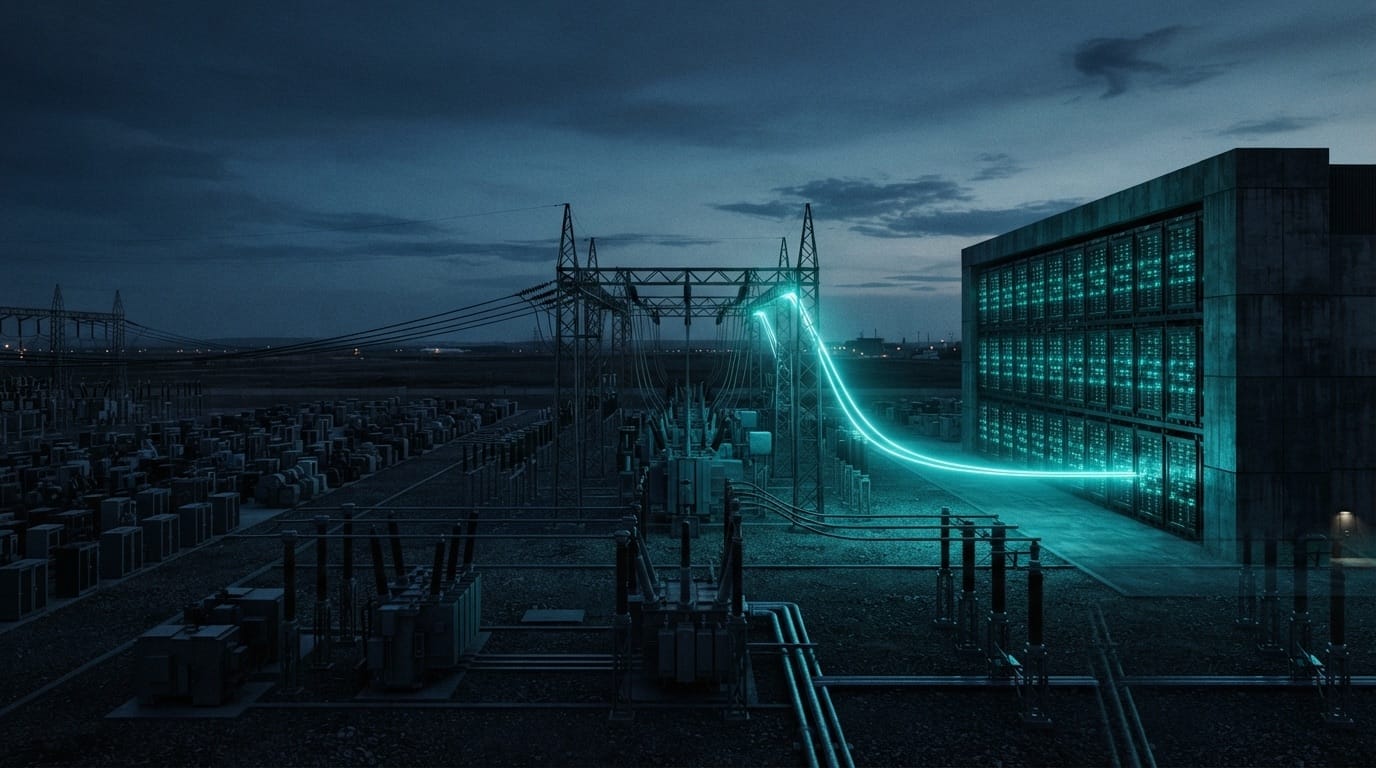
Somebody does now. By the end of July 2026, miner-to-AI deal volume had passed 7.5 gigawatts, equivalent to roughly $150 billion in multi-year contracts. The clearest single example is TeraWulf, which signed a twenty-year lease with Anthropic for a Kentucky site built on a former aluminum smelter — about $19 billion in contracted revenue against $3 billion to $4 billion of TeraWulf's own capital, with 401 megawatts at full build.
A miner does not have to believe anything about artificial intelligence to sign that. It only has to compare the contract to the alternative.
Hashprice, the revenue a miner earns per unit of computing power, fell to $27.66 per petahash per day in late June, within a cent of February's low. It has since recovered more than 40%, sitting near $38.86 by late August. Total network revenue for August came in at just over $1 billion from block rewards.
Meanwhile bitcoin itself has been trading near $78,000, which is not the number anyone modeled when this generation of machines was ordered.
Set that against an AI lease. One is volatile revenue denominated in an asset the miner cannot control, subject to a halving on a fixed schedule. The other is a two-decade contract with a counterparty that has raised billions and needs power more than it needs a discount. Analysts covering the transition expect mining to fall from roughly 85% of these companies' revenue in early 2025 to under 20% by the end of 2026 for the operators who have signed.
The word "miner" is becoming a description of corporate history rather than of business activity.
Here is where the honest concession belongs. A 20% drawdown in hashrate does not make bitcoin insecure. Nine hundred exahashes is a preposterous amount of computation to marshal against, and the network has recovered from far steeper drops — the 2021 China ban cut more than half the hashrate in weeks, and the chain kept producing blocks.
Difficulty adjustment is doing precisely what it was designed to do. Capacity leaves, blocks slow, difficulty falls, the remaining miners get more profitable, equilibrium returns. The system is working.
What has changed is not the level. It is the elasticity.
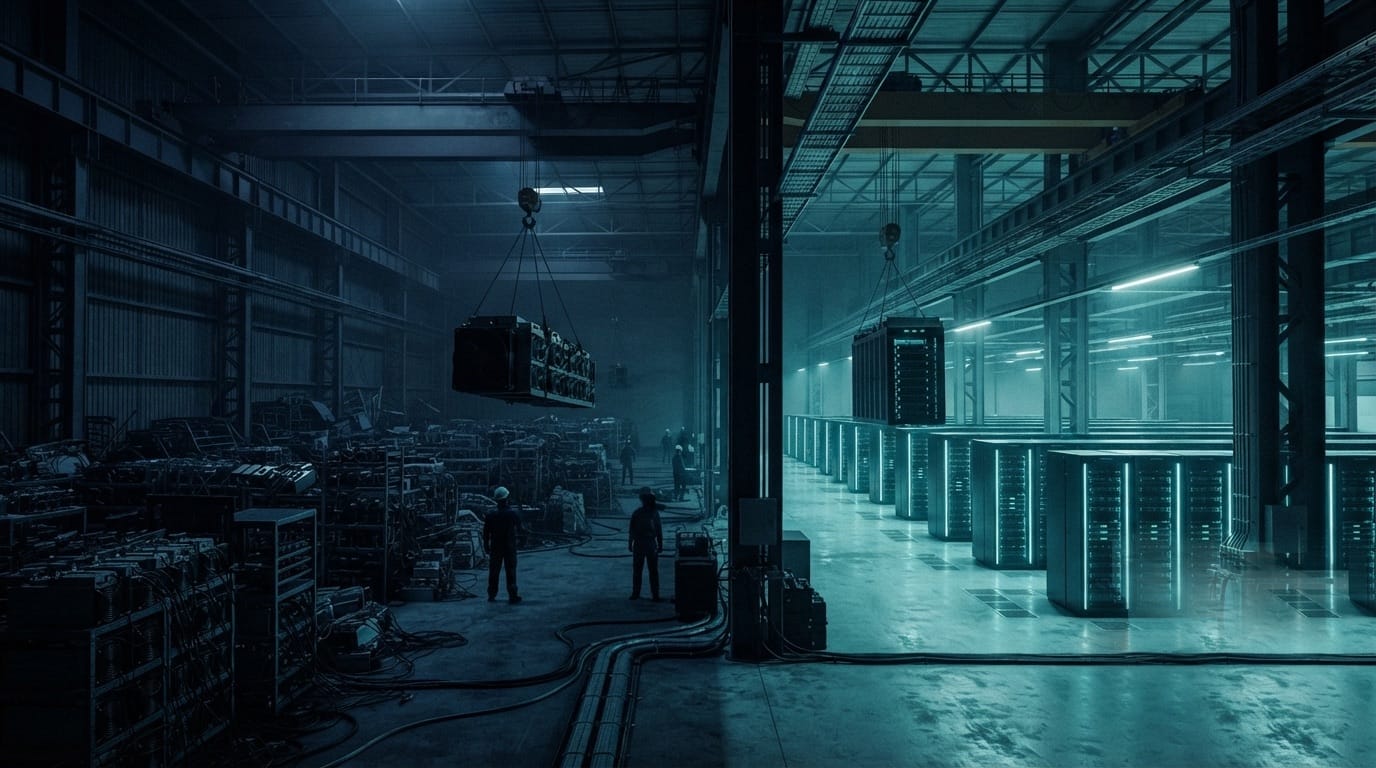
For fifteen years, hashrate was essentially a function of bitcoin's price, because bitcoin's price was the only thing that determined what a hashing facility was worth. Now these facilities have a second bidder, and that bidder signs twenty-year terms at margins mining has never produced. Hashrate has become a function of two prices, and only one of them belongs to bitcoin.
The practical consequence is a ceiling nobody had to think about before. In the next bull run, bitcoin's price can rise without hashrate following it in the old proportion, because the megawatts that would have chased that price are contractually spoken for through 2047. Power that is leased is not marginal capacity waiting to be called back.
The obvious response is that AI demand is cyclical and mining is forever. Data center contracts get renegotiated, AI capital expenditure has been called a bubble by people with good track records, and if that spending contracts, the megawatts come home.
Some will. But a site retrofitted for high-density liquid-cooled inference is not trivially reconverted into a mining shed, and a company that has spent two years telling public shareholders it is an infrastructure business will not enjoy telling them it is a bitcoin miner again. Capital has a memory, and so do boards.
There is a second rebuttal worth taking seriously: this is healthy consolidation. Inefficient operators exit, the network sheds the marginal capacity it never needed, and what remains is better capitalized. That is probably true. It is also compatible with a network whose defense budget is now set partly by someone else's compute demand curve.
Bitcoin's price gets reported hourly and explains very little. Difficulty and hashrate are slower, more honest signals — they measure what operators actually did with capital rather than what traders felt. Anyone tracking the industrial reality of the network alongside the market, whether through a mining dashboard or a general portfolio tool like The Crypto App, gets a straighter answer from the retarget schedule than from the chart.
The number to watch is not whether hashrate reclaims 1,151 EH/s. It is whether the next sustained rally in bitcoin pulls hashrate up the way every previous one did. If it does not, the relationship that underwrote proof of work for fifteen years has quietly been replaced by a leasing market — and the people setting the price of bitcoin's security will be the ones buying GPUs.
Onuora Amobi ·
Onuora Amobi ·
Onuora Amobi ·
Onuora Amobi ·
Onuora Amobi ·

Onuora Amobi ·