Code Is Law' Just Hired a Lawyer
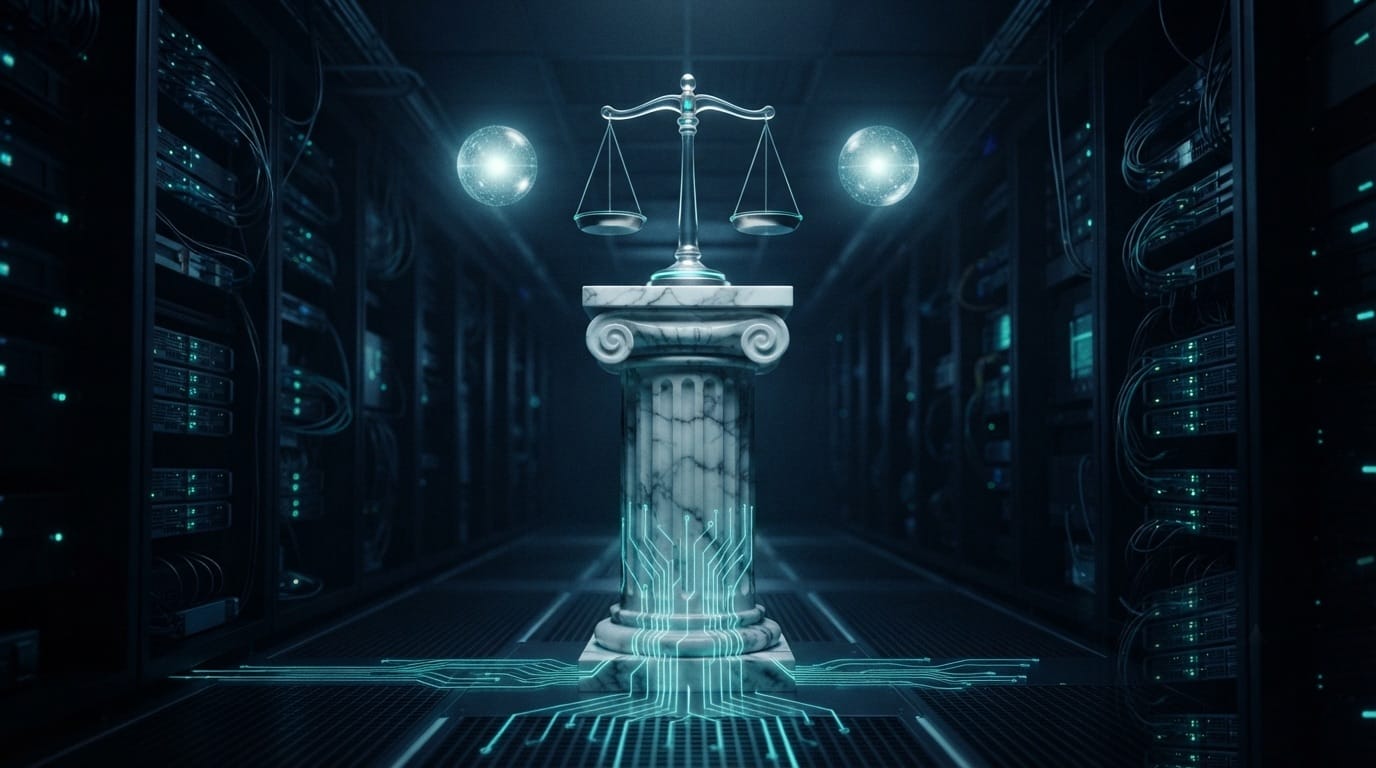
Crypto spent fifteen years insisting it didn't need courts, and this week it got one anyway — built at the industry's own request. On July 29, the American Arbitration Association launched a Web3 Panel, a specialized roster of arbitrators for disputes over smart contracts, digital assets, tokenization, decentralized systems, and transactions executed by autonomous AI agents. Web3 arbitration is now an institutional product, with a case number and a filing fee.
Sit with the irony for a moment. "Code is law" was never just a slogan; it was a jurisdictional claim. Disputes wouldn't need judges because the contract would enforce itself. The 2016 DAO hack tested that claim within months of it becoming serious money, and the community's answer — a hard fork reversing the outcome the code had produced — settled the question for anyone paying attention. Code executes. It doesn't adjudicate.
The panel exists because the code kept needing witnesses
The AAA's roster reads like an admission of everything self-enforcement can't reach. The panel covers contract formation in decentralized environments, governance fights, asset-control questions, cybersecurity incidents, and cross-border enforcement — with arbitrators drawn from Akin Gump, Nelson Mullins, Penn's Carey Law School, and Google Cloud.
Every item on that list is a place where the blockchain records what happened but cannot say what should have happened. A governance vote executes exactly as coded and still leaves half the token holders claiming the process was captured. An exploit drains a protocol through a function working precisely as written. The chain is a perfect witness and a useless judge.
Practitioners have known this for years, which is why serious token agreements quietly reverted to Delaware law and arbitration clauses while the marketing kept saying trustless. The Web3 Panel doesn't change that reality. It prices it.
The AI agent clause is the real story
Buried in the announcement is the reason this matters beyond crypto's usual litigants: the panel explicitly covers agentic commerce — transactions initiated by AI agents acting for people and companies. It arrives paired with the Legal Context Protocol, an open standard the AAA built with Integra Ledger that attaches a cryptographic fingerprint to a transaction's legal terms, so a court or arbitrator can later verify what was actually agreed.
Look at who signed up as founding contributors: Google, IBM, Circle, Wayfair, UiPath, plus the foundations behind Stellar, Cardano, Hedera, Aptos, and Sui. That's not a crypto guest list. That's commerce infrastructure preparing for a world where software buys from software, and where "who agreed to what" cannot be reconstructed from a chat log.
The logic is hard to argue with. When your procurement agent negotiates with a supplier's pricing agent at 3 a.m. and something goes wrong, no human witnessed the deal. The only usable evidence is a verifiable record of the terms both pieces of software carried into the transaction. Machines need notarized context precisely because they can't be deposed.
Which means crypto's dispute problem and AI's dispute problem just merged into one problem. The blockchain industry spent a decade building tamper-evident records nobody outside finance wanted. The AI industry now generates millions of transactions a day that desperately need tamper-evident records. The AAA panel is where those two curves cross — and the fact that an arbitration body spotted the intersection before most protocol foundations did should sting a little.
Trust infrastructure was always the product
But there's a reading of this week that flatters crypto rather than embarrassing it. The industry didn't fail at eliminating trust. It succeeded at something narrower and more useful: making specific promises mechanically verifiable, so that lawyers are only needed for the promises that remain.
That division of labor already runs through the parts of the market that work. When a project locks its liquidity or team tokens through a service like Team Finance, nobody is trusting a founder's word or preparing a lawsuit — the lock is inspectable by anyone and enforced by no one, because it needs no enforcement. The disputes that reach an arbitrator are the ones code genuinely can't settle: intent, fraud, capture, force majeure. Narrowing the set of arguable questions is what the technology was for.
Concede the maximalists their loss: pure self-enforcement was a fantasy, and the AAA panel is its headstone. What replaced it is a stack — code for the verifiable layer, cryptographic records for the evidentiary layer, human arbitrators for the judgment layer. Each layer covers the failure mode of the one below it.
The unresolved question is whether decentralized systems will accept the outputs. An arbitral award against a DAO with no legal wrapper, no treasury signers in reach, and a governance process that can simply vote to ignore the ruling is a piece of paper. Cross-border enforcement of on-chain awards is precisely the kind of problem the panel lists in its scope and nobody has solved in practice.
So here's the forward bet. Within a few years, the standard token agreement, the standard agent-to-agent transaction, and the standard DAO charter will all carry an arbitration clause pointing at a body like this one — and the interesting fights won't be about whether code is law. They'll be about what happens the first time a smart contract is ordered by a human tribunal to disobey itself.