Crypto's Most Important Bill Might Die of a Scheduling Conflict
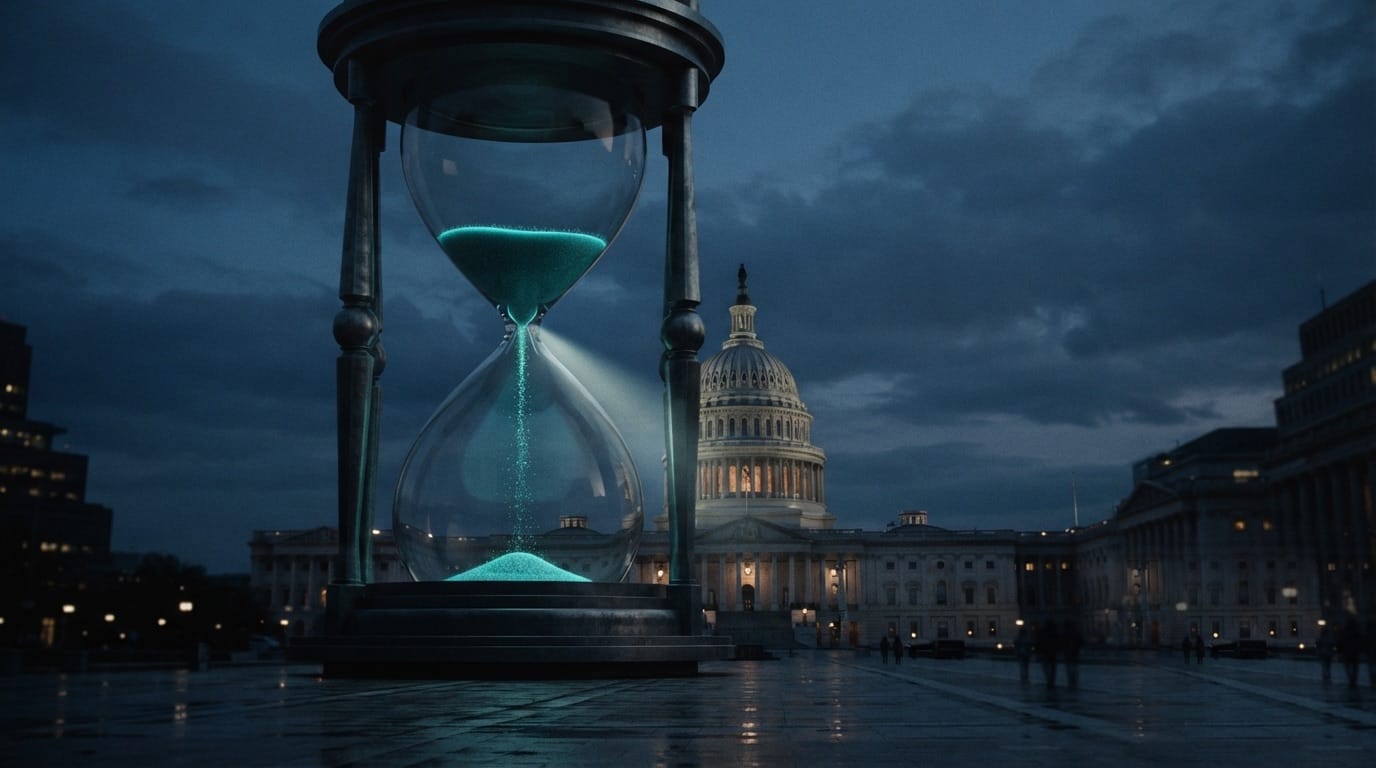
The biggest threat to American crypto regulation right now isn't a hostile senator, a lobbying blitz, or a market crash. It's a calendar. The CLARITY Act — the market structure bill that would finally decide which digital assets are commodities, which are securities, and who regulates the exchanges in between — has until the Senate's August recess to reach the floor. The state work period begins August 10. The last real working day is August 7.
That's this week. And as of Friday, the Senate hadn't even filed a motion to proceed.
A bill with everything except a time slot
What makes the situation absurd is how close the finish line is. The Senate Banking Committee has approved the bill. Negotiators have produced merged legislative text. Months of horse-trading have narrowed the disputes to two remaining issues: government ethics provisions and the treatment of stablecoin rewards.
Neither is trivial. The ethics fight — over whether elected officials and their families should be barred from profiting off digital assets they help regulate — carries obvious political voltage in a Washington where the first family has crypto ventures. The stablecoin rewards question reopens a wound the GENIUS Act supposedly closed last year. But these are two issues, not twenty. Bills have crossed wider gaps in less time.
Senate leadership signaled in late July that the bill was expected to miss its window before the break. Then it was left off Monday's floor schedule entirely, which observers read as the start of a 72-hour countdown on the bill's 2026 prospects. Kevin O'Leary now puts the odds of passage this year at 50-50. Coin flips are not how superpowers are supposed to set financial policy.
September is not a safety net
The comforting story says a missed deadline just means a short delay. The bill returns after recess, negotiations resume, everyone shakes hands by Thanksgiving.
History says otherwise. September brings appropriations season and the annual government shutdown theater, which devours floor time. Then the calendar tips into 2027 — and into midterm campaign season, when senators become allergic to votes that can be weaponized in attack ads. DL News, mapping the key dates for U.S. crypto regulation, notes that every month of slippage makes the clock less forgiving, not more.
Senator Cynthia Lummis has been making the geopolitical version of this argument, pressing colleagues to pass the bill swiftly or watch digital asset leadership drift toward China's financial technology push. You can discount that framing as lobbying — plenty do — and still concede the underlying point: firms are choosing jurisdictions now, not in some abstract future. CoinDesk's policy desk spent the weekend counting down the days for a reason.
The cost of limbo is paid daily, in small amounts
Here's what gets lost in the horse-race coverage: regulatory ambiguity isn't a dramatic cost. It's a grinding one.
Nobody's business collapses on August 8 if the bill stalls. Nothing that visible happens at all. What happens instead is a thousand quiet decisions tilting a few degrees away from the United States — a hiring plan that adds counsel instead of engineers, a product feature shelved because no one can say which regulator would object, a market maker that quotes thinner because the rules under its inventory might change retroactively.
Every token project deciding whether its asset might be deemed a security prices in legal risk. Every exchange listing committee errs conservative. Every U.S. venture round includes a jurisdictional discussion that a founder in Singapore or Dubai simply skips. None of it makes headlines. All of it compounds.
The teams that keep shipping through the fog have adapted by making trust verifiable where the law won't. Locking team tokens and liquidity through on-chain services like Team Finance has become standard diligence hygiene precisely because investors can't rely on a regulatory floor beneath new tokens. And launches increasingly route through platforms that screen projects — the TrustSwap Launchpad model — because in a vacuum of official rules, private vetting is the rule that exists. That's a workable equilibrium. It shouldn't be a permanent one. Escrow and vetting can prove a team won't rug its own liquidity; only Congress can say which agency shows up when something breaks anyway.
The bill's critics — and there are serious ones — argue CLARITY hands too much to the CFTC, an agency a fraction of the SEC's size, and that its decentralization tests are gameable. Fair concerns. But the alternative on offer isn't a better bill. It's no bill, plus another year of regulation by enforcement, where the rules get written one lawsuit at a time by whichever judge draws the case.
So watch the floor schedule this week, not the price charts. If a motion to proceed appears before Thursday, the merged text has a real shot at becoming the law that finally answers crypto's oldest American question. If it doesn't, the industry learns an older Washington lesson: a bill can survive its enemies and still be killed by August.
Either way, the market structure question doesn't wait politely. Capital, talent, and the next thousand token launches will get regulated by someone this year — the only thing the Senate decides this week is whether that someone is Congress.