
Kite's Team and Investors Unlock $96 Million in KITE. AI Agents Spent $24 Million in a Month.
Onuora Amobi ·
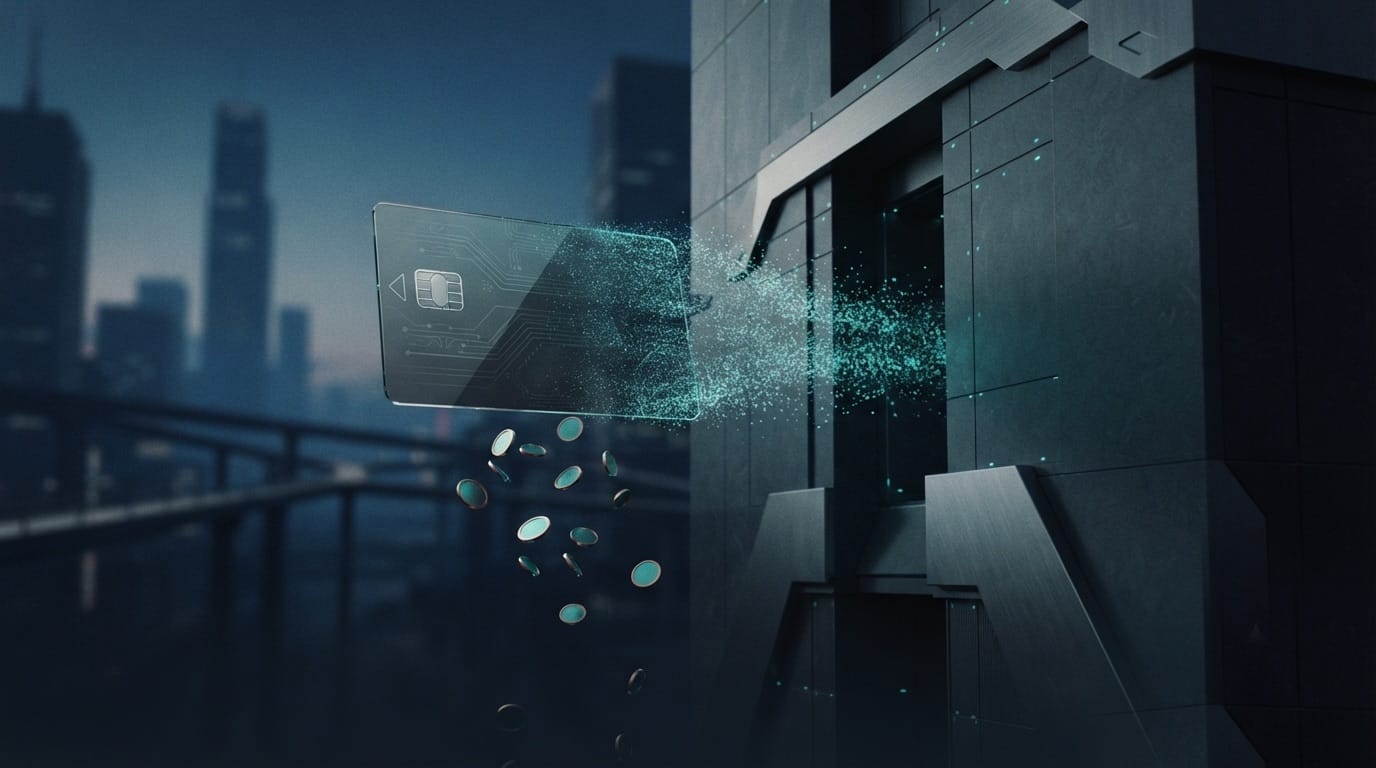
An acquisition announcement is supposed to be good news, but for the users of one crypto card app it was an eviction notice. In early July, Singapore-based payments firm Nium acquired Cypher, a crypto wallet and card platform that let users spend digital assets like cash. Within days, Cypher's own blog confirmed the entire consumer product is being sunset: the mobile app, the dApp, and the business card platform all shut down on September 6.
Card top-ups have already been halted. Payments keep working only until August 7. Users have weeks — not months — to pull their balances out of a product some of them used as a daily spending account.
And the CYPR token? It crashed 88% in 24 hours, because the announcement confirmed there would be no compensation, no buyback, and no conversion for holders. Tokens still under vesting stay locked under their original schedules — locked, now, around an asset whose reason to exist has a countdown clock.
The corporate logic is clean. Nium gets Cypher's stablecoin card issuance and on-chain infrastructure to bridge fiat and digital asset payments; Cypher's founder Kuberan Marimuthu joins as vice president of digital assets; the consumer app that acquired those capabilities in the first place gets discarded as packaging. Financial terms weren't disclosed. They rarely are when the sellers do fine and the token holders don't.
Angry holders have called it a rug pull in a suit, while the team maintains it is a standard corporate acquisition. Both descriptions are accurate, and that is precisely the problem. Nothing here appears illegal. Nobody drained a contract or faked an audit. A company sold its assets, and the token that ran on those assets simply stopped mattering. The playbook was legitimate — and the outcome for holders was indistinguishable from a scam.
Consider what CYPR holders actually owned. Not equity — Nium owes them nothing. Not a claim on revenue. They held a utility token whose utility a boardroom could delete, and a boardroom did.
Crypto talks about tokens as if they were self-sustaining organisms. Most are barnacles. They live attached to a company's product, and when the product dies — through failure or, as here, through success — the token dies with it, minus the bankruptcy process that would at least rank creditors.
The pattern is everywhere once you look for it. The wallet firm Exodus, a public company, just watched Benchmark cut its price target nearly in half after layoffs. Consumer crypto apps are consolidating into payments infrastructure, and infrastructure buyers want rails, not retail users and certainly not someone else's token obligations.
Here is the uncomfortable irony for anyone who thinks lockups alone equal safety: Cypher's vesting contracts worked perfectly. The locked tokens are still locked. Vesting schedules and liquidity locks — the kind teams set up through Team Finance — are built to stop insiders from dumping on holders, and they do that job well. They cannot stop a business from selling itself out from under its own token. Locks are a defense against betrayal, not against strategy. Anyone evaluating a token needs to check both: whether the team can dump, and whether the token survives the team's best-case exit.
The sharper lesson is about custody, and it is older than this acquisition. Every balance inside Cypher's app was a promise, not a possession. The promise is now expiring on a schedule set by an acquirer's integration roadmap, and users must withdraw before the September 6 cutoff or deal with whatever recovery process follows.
Eight weeks is generous by the standards of this industry — exchange collapses have given users zero. But the generosity is the tell. When your access to your own money is a grace period someone else grants you, you never had money in the app. You had an IOU with a nice interface.
The self-custody crowd will say they told you so, and they did. But the honest version of the argument admits the trade-off: custodial apps died because people wanted convenience, and self-custody keeps losing that fight on user experience. The workable middle is separating watching from holding — keep assets in wallets you control, and use a portfolio tracker like The Crypto App as the read-only window across them, so no single company's pivot can take your balances down with its business model. A tracker shutting down costs you a dashboard. A custodian shutting down costs you a deadline.
Zoom out and Cypher is not an anomaly; it is the leading edge. Stablecoin payment volume is exactly what every payments incumbent now wants, and the fastest way to get it is to buy a crypto-native team and strip it for parts. Nium's move follows the same logic as Visa's new platform for issuing and managing stablecoins: the infrastructure gets absorbed into finance, and the consumer-facing crypto brand becomes optional.
That absorption is, in the aggregate, bullish for the technology. It is ruthless for the apps. There are hundreds of consumer crypto products — cards, wallets, yield apps, portfolio tools with custody bolted on — and most will end one of three ways: acquired and gutted, shut down quietly, or regulated into a bank subsidiary. Their tokens, in most cases, will not be invited to the next chapter. The $12.4 billion decline in stablecoin market cap since mid-May hints at the same consolidation pressure: the sector is sorting winners from packaging.
Could Nium have done right by CYPR holders — a conversion, a buyback, even a symbolic distribution? Sure, and a few acquirers in similar spots have. But expecting grace is not a strategy. The acquirer's lawyers will always note, correctly, that a utility token conferred no rights. If holders want rights, they need instruments that carry them — equity, revenue shares, tokens with enforceable claims — and that is a securities-law conversation the industry keeps postponing because the current ambiguity flatters everyone's valuations.
Until that conversation happens, every consumer crypto app is running the same quiet auction, and its users are the inventory that doesn't get a bid. The next Cypher is already in due diligence. The only question worth asking about your own apps is which side of the September 6 deadline you'd rather discover them on.
Onuora Amobi ·

Onuora Amobi ·
Onuora Amobi ·

Onuora Amobi ·

Onuora Amobi ·

Onuora Amobi ·