
Coinbase Spent 14 Months Building an Everything App. Then It Renamed It a Wallet.
Onuora Amobi ·
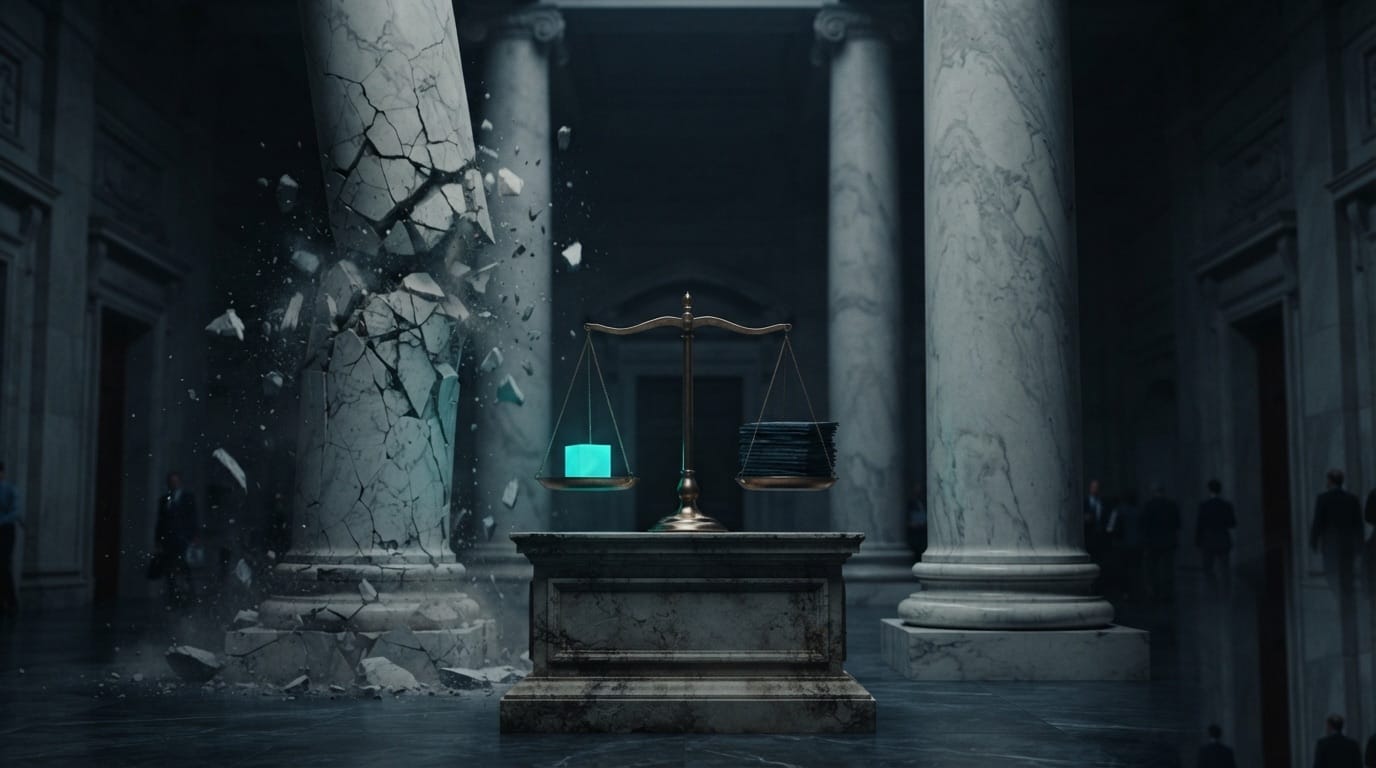
The United States Congress cannot agree on whether a token is a security or a commodity, but it has now agreed, 38 to 5, on how to tax it.
On Wednesday morning the House Ways and Means Committee advanced the Digital Asset Tax Certainty Act, the first federal crypto tax framework to clear a congressional committee. It did so less than eighteen hours after the Senate voted 49-50 against advancing the Clarity Act, the market-structure bill the industry had spent two years and a great deal of money on.
The sequencing is not an accident. It is a lesson in what Washington can and cannot do.
Market-structure legislation asks Congress to decide what crypto is. That question splits the SEC from the CFTC, banks from exchanges, and, as Tuesday showed, Democrats from a bill they helped write, because ethics provisions covering the president's crypto holdings were never strong enough for them to sign.
Tax legislation asks a smaller question: when money changes hands, what does the Treasury get? That is a question Ways and Means answers every year for every asset class, and the crypto tax bill answers it mostly by pointing at existing rules and saying "those." Wash-sale restrictions extend to widely traded digital assets. Mining and staking income is ordinary income. Brokers report. Stablecoins and certain lending arrangements get carve-outs that mirror how cash and securities lending already work.
Chair Jason Smith called it "the first-ever tax framework for digital assets" and a product of more than a year of bipartisan work. He is right on both counts. He is also describing a bill that succeeded because it declined to answer the hard question.
The provision most retail users will notice is a de minimis rule: network and transaction fees of $10 or less would no longer trigger a taxable gain or loss. Under current law, paying a $3 gas fee in ETH is technically a disposal of ETH, with a cost basis and a capital gain. Multiply that by every swap, every claim, every bridge, and the average active wallet generates hundreds of reportable events a year that nobody reports.
The fix is sensible. It also does not take effect until December 2027, and it excludes service providers acting on behalf of others. The exemption applies to a fee, not to a purchase; buying a coffee with USDC remains a taxable disposal of USDC, even if the fee on top is exempt. The Crypto Council for Innovation's Alison Mangiero has already flagged that "broader de minimis relief for everyday digital asset transactions" is on the list of things still to fix.
For anyone who runs token operations, the fee exemption is a small mercy on a much larger problem. A project distributing vested tokens on a schedule through a lock contract on Team Finance is generating a gas fee on every claim, and under the new bill those fees would stop being tax events. The claims themselves, and what the recipient does with them, remain as complicated as ever.
The bill's most consequential silence is on timing. It establishes that mining and staking rewards are ordinary income, which was already the IRS's position. What it does not say is when that income is recognized: at the moment a reward is created, when it becomes transferable, or when it is sold.
An earlier draft contained a deferral option. It was stripped before the vote. Rep. Steven Horsford, a Democrat who worked on the bill, said the package "leaves that timing question unresolved" and that he continues to believe Congress needs to address it. He voted for it anyway.
The omission matters because staking is now the default way most proof-of-stake tokens are held. If rewards are income at creation, a validator on a chain whose token falls 60% during the year owes tax on income it never realized, in an asset now worth a fraction of the assessed value. That is the scenario that has driven staking operations offshore, and the bill that was supposed to fix it decided not to.
The bill is scored to raise about $500 million over the budget window. The wash-sale extension, which closes a loophole crypto traders have used to harvest losses in December and buy back in January, raises more than the fee exemption and the stablecoin carve-outs give away.
That is the tell. This is not a tax cut dressed as clarity; it is a revenue-neutral-to-positive package that trades a handful of retail conveniences for the end of the most popular tax-loss strategy in the asset class. Rep. Lloyd Doggett, one of the five no votes, argued it still "bestows billions in tax breaks" on whales and the Trump family. The Joint Committee score suggests otherwise, but the fight over who benefits will follow the bill to the floor.
The floor is the problem. The House leaves Washington until after the November elections, which puts any full vote into a lame-duck session and puts the Senate Finance Committee, which has expressed interest but produced nothing, on the clock for a companion.
So the state of play is this. The bill that would have told the industry which regulator it answers to is dead for the year. The bill that tells the industry what it owes is alive, bipartisan, and waiting for a December calendar. If both had passed, the tax bill would have been the footnote. Instead it is the headline, and a market that spent two years lobbying for a rulebook is about to discover that the IRS writes faster than the SEC.
The next Congress will pick up the Clarity Act again. But the version it picks up will be negotiated by an industry that has already agreed to wash-sale rules, ordinary-income staking, and broker reporting — and once you have conceded the tax treatment, the argument about what the asset is becomes a lot harder to win.
Onuora Amobi ·

Onuora Amobi ·

Onuora Amobi ·

Onuora Amobi ·

Onuora Amobi ·

Onuora Amobi ·