An AI Found a Bug That Could Mint 18 Trillion XRP. The Reward Was $250,000.
Onuora Amobi ·
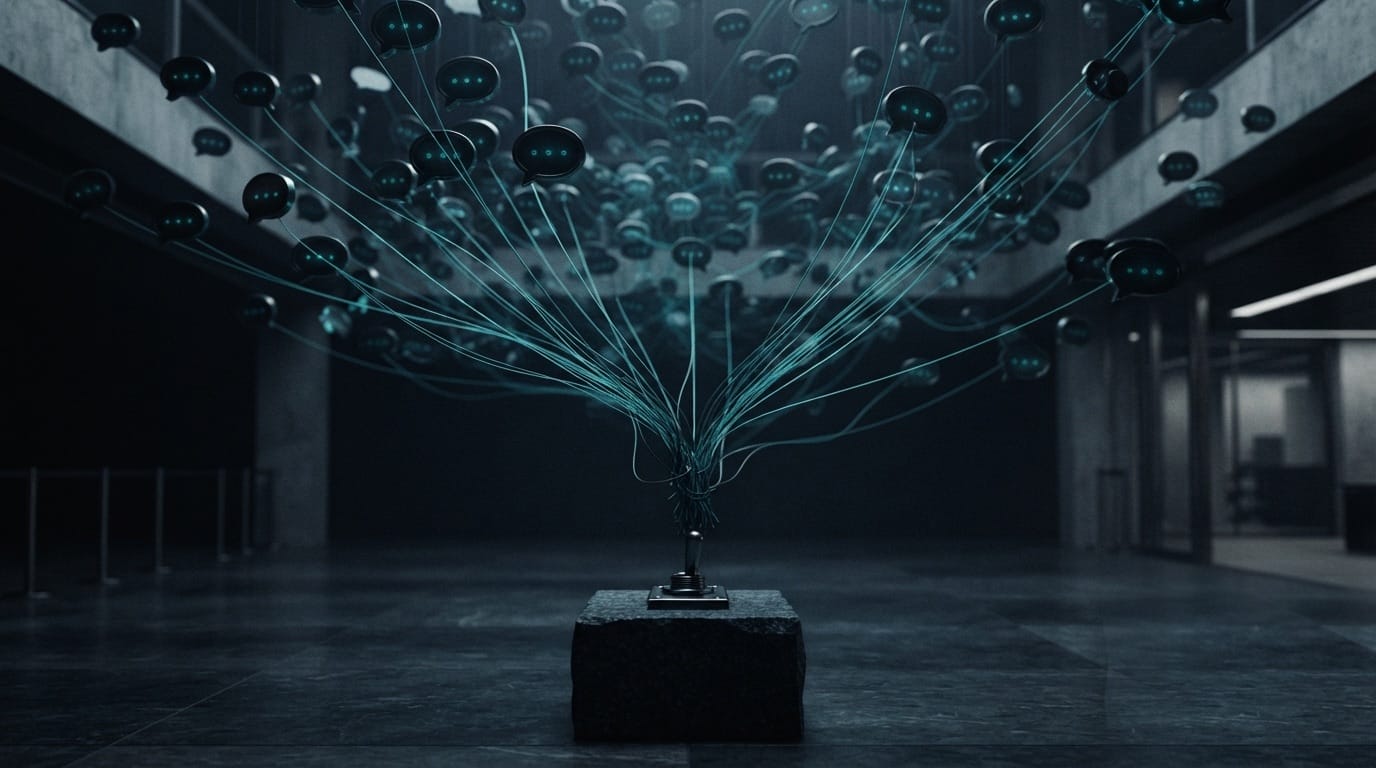
The most consequential crypto outage of the year required no hacker, no bridge exploit, no failed smart contract. It took a domain registry in Montenegro changing a single database entry.
On July 13, Telegram's t.me domain was placed on serverHold status by the .ME registry, and every t.me link on the internet stopped resolving. Invite links died. Channel links died. Bot links, mini app links, the shortcuts printed on conference banners and buried in a decade of tweets — all dead at once. And with them went the primary consumer on-ramp to TON, the blockchain whose entire growth thesis is that it lives inside Telegram.
Pavel Durov appeared to learn about it the way everyone else did. "Hey @domainME, t.me links stopped working. Can you look into it?" he posted on X. The man who built his reputation on refusing government data demands was reduced to tagging a domain registry in public and waiting.
ServerHold is an EPP status code applied at the registry level, one layer above Telegram's own registrar. When a registry sets it, the domain's records are simply removed from global DNS. There is no gradual degradation and no customer service line that fixes it in an hour. The domain exists on paper and nowhere else.
Registries reserve the status for unpaid fees, verification problems, or suspected fraud, and as of this writing neither Telegram nor the .ME registry has said which applied. That silence is its own story. A platform that moves crypto for hundreds of millions of people lost its front door, and nobody with the power to reopen it felt obliged to explain.
.me is not a neutral technical artifact. It is the country-code domain of Montenegro, administered under Montenegrin authority. Telegram built the world's largest crypto distribution funnel on infrastructure that answers, in the last instance, to a small Balkan state's registry policy.
The t.me shortcut is how more than a billion users reach Telegram's Wallet, TON mini apps, and collectible usernames — the connective tissue of a token economy worth roughly $4.3 billion. Every tap-to-earn game, every wallet referral link, every token community that onboards members through a t.me invite watched its acquisition pipeline flatline overnight.
Here is the uncomfortable contrast. On-chain infrastructure kept working. TON kept producing blocks. Liquidity locks that token teams had parked with Team Finance sat exactly where the contracts said they would sit, because a smart contract does not care what DNS thinks. The parts of these projects that lived on-chain survived untouched. The parts that lived on a Web2 shortcut — the community, the distribution, the growth loop — went dark.
The tell is simple: ask what breaks when a government, a registry, or a bored administrator flips one switch. For TON, the answer turned out to be the entire consumer experience.
The fair counterpoint deserves its space. Telegram's apps kept functioning, direct navigation inside the app still worked, and users who already had mini apps installed barely noticed. This was a severed on-ramp, not a destroyed city. If the hold lifts quickly, the lasting damage may round to zero.
But distribution is the product. TON's valuation premium over technically comparable chains rests almost entirely on its claimed billion-user funnel. When that funnel routes through a single rented domain, the premium is not a decentralization premium. It is a Telegram dependency, priced as an asset when it is also a liability.
There is a practical lesson for users, too. If your view of your own portfolio routes through chat-app links and bot commands, your access inherits every fragility in that chain. A standalone mobile tracker like The Crypto App reads balances from chains and exchanges directly — which, on a day when t.me links are returning nothing, stops being a convenience and becomes the whole point.
Governments spent years learning that pressuring Telegram directly is slow and noisy. France arrested Durov in 2024 and got headlines, litigation, and a martyr narrative. A registry hold is quieter, faster, and deniable — an administrative action with no press conference required.
Whether or not this incident began as politics, every regulator watching just received a proof of concept. The chokepoint for crypto's largest consumer platform is not the blockchain, not the app stores, not even Telegram's servers. It is a two-letter domain governed by paperwork in Podgorica.
TON's builders now face a question they should have answered years ago: what does a billion-user on-ramp look like when no single registry can turn it off? Until someone ships that answer, the world's most successful crypto distribution machine keeps running with a kill switch it doesn't hold — and now everyone knows where the switch is.
Onuora Amobi ·
Onuora Amobi ·
Onuora Amobi ·
Onuora Amobi ·

Onuora Amobi ·

Onuora Amobi ·