5.7 Million Downloads Is a Distribution Channel, Not a Vanity Metric
Onuora Amobi ·
On October 15, StandX, a perpetual futures exchange founded by former Binance Futures head Aaron Gong, announced it was shutting down and would not launch a token. Since its mainnet went live in November 2025 it had signed up more than 237,000 users and peaked above $200 million in deposits. Today, October 20, its order books flipped to reduce-only. Traders can close positions. They can't open new ones.
Instead of a token, StandX is sending its users dollars, or something close to them. All remaining platform revenue plus "additional capital injected by the team" will be paid out as DUSD, the exchange's own settlement stablecoin, with no lockup and no vesting. Co-founder AG.stand argued that issuing a token without a sustainable business would only push the cost of short-term speculation onto the community. Crypto Twitter mostly called it the classiest exit of the year.
It might be. But one line in the announcement deserves more attention than the rest. Unclaimed DUSD, StandX says, will be "fully burned and reclaimed."
Burned and reclaimed. Those are two different things.
That distinction sounds pedantic until you put StandX next to the other airdrop deadlines landing this month. Every one of them has to answer the same question: what happens to the money people don't come back for? The answers differ more than the marketing suggests.
Sonic Labs gave holders of its first two airdrop seasons until October 15 to claim. Roughly 32.69 million unclaimed S tokens were set to be burned after the cutoff, with the burn built into the contract so that any address could trigger it. No new tokens would be minted to replace them.
That is a burn in the sense crypto usually means. An S token is a claim on nothing except the network itself. Destroying 32.69 million of them shrinks the supply, and every remaining holder owns a slightly larger slice. Nobody gets the value. It just disappears into everyone else's share.
Grass, the bandwidth-sharing network, went the dollar route months before StandX did. Its Stage 2 rewards are paid in USDC, not GRASS, which the project attributes to "ongoing regulatory uncertainty." The page publishes an actual exchange rate, $0.0049 per Network Point, so any participant can do the math on what their activity was worth. Claims close January 22, 2027. And the page is blunt about what happens next: "Unclaimed rewards will be retained by Grass."
Pharos is equally direct. Its claim portal closes October 25, and per the project's own FAQ, any unclaimed tokens "will be returned to the Pharos Foundation." Meteora, whose Season 2 liquidity-provider claim closes October 21, handles a related case differently: wallets that fall below its minimum allocation lose their share, which is redistributed among the remaining eligible wallets, though the project hasn't said what happens to allocations that simply go unclaimed.
You can argue about whether a foundation should keep unclaimed rewards. But Grass and Pharos at least tell you where the money goes.
DUSD is not a governance token. StandX describes it as a fully collateralized stablecoin, redeemable for USDT through its official portal until January 31, 2027. That backing is the whole point. It is why a dollar airdrop beats a token airdrop for the people receiving it.
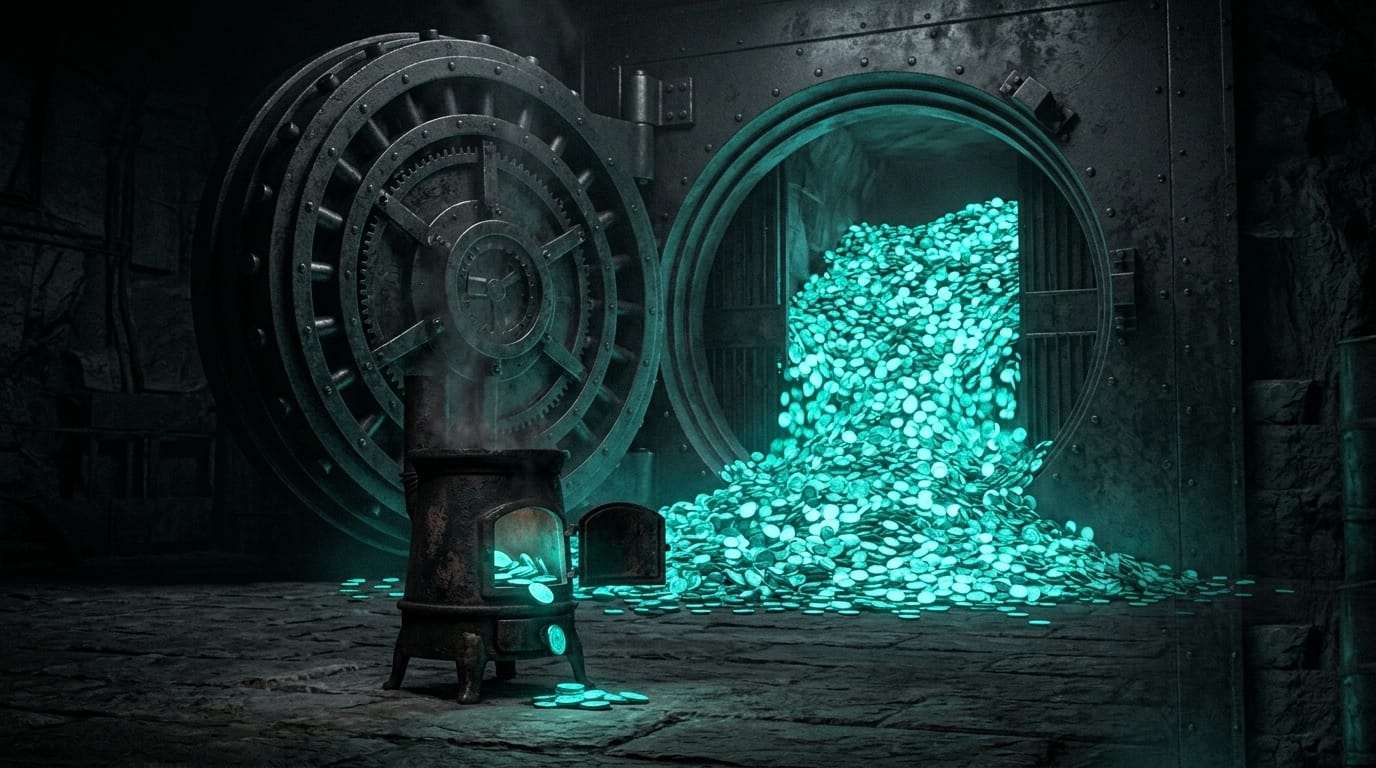
It is also why "burn" doesn't mean what it does for Sonic. When a collateralized stablecoin is burned, the token goes away but the reserve behind it doesn't. Burning a dollar of DUSD cancels a dollar of the issuer's liability. The dollar of collateral that backed it is still sitting in the reserve, now owed to no one. Burning unclaimed DUSD doesn't make that value disappear into everyone else's share, the way Sonic's burn did. It frees it.
So where does it go? The announcements don't say. TokenPost's summary says simply that unclaimed tokens "will be forfeited." Neither that write-up nor the crypto.news report says what happens to the collateral behind forfeited DUSD, and StandX has not disclosed the total size of the airdrop or any individual allocation either. Users will find out what they're getting when the eligibility checker opens on October 26. Nobody outside the company knows how big the pot is, so nobody can know how much of it goes unclaimed.
To be clear, there is no evidence StandX intends to keep anything. The team is adding its own capital to the payout, which is the opposite of an extraction. The likeliest explanation is sloppy wording borrowed from token culture, where "burn" is a reflex. But wording is the only thing users have to go on. And when the asset is a dollar, "burned and reclaimed" can mean "returned to the people who hold the reserve" just as easily as it can mean anything else.
The strongest case for StandX is simple, and it's correct. A token airdrop from a shutting-down exchange would have been a trap. Recipients would have dumped on each other, the price would have found zero within weeks, and the founders would have walked away with a ticker and a cleaner conscience than they'd earned. A dollar is worth a dollar. There's no vesting cliff for anyone to front-run, no unlock calendar, and no question of how much float insiders control.
Compare that with what token holders are dealing with this same week. LayerZero's scheduled release of 23.28 million ZRO today, about $43.5 million at the time of the projection, goes to strategic partners and core contributors, with Plasma and Humanity unlocks following on October 25. That's the normal lifecycle of a launched token: the people who got in first keep receiving supply on a schedule, and everyone else absorbs it. Projects that put that supply in a verifiable vesting contract at least let holders see it coming. StandX's users never have to worry about any of it.
And StandX did the unusual thing of admitting failure. It did not raise outside venture capital, never reached its goal of ranking among the top three perp exchanges, and chose to wind down rather than issue a token to cover the gap. Two other perp venues, Satori Finance and Pingu Exchange, have already folded. Neither exited with this much grace.
Here is why the thesis holds anyway. A token airdrop hides its true value behind a price nobody can predict. A dollar airdrop has no such cover. The moment a project pays in stablecoins, every question becomes an accounting question: how much revenue was left, how much the team added, how much was allocated, how much was claimed, and where the remainder went.
Grass answered most of those questions by publishing a per-point rate and saying plainly that it keeps what's unclaimed. StandX has answered almost none of them. It switched from a speculative asset to a verifiable one, then kept the disclosure habits of the speculative one.
The fix is cheap. Publish the total DUSD allocated. Publish the claimed total on January 1. Say in writing whether the collateral behind burned DUSD goes back to users, to a charity, or to the founders' wallets. Any of those answers is defensible. Silence isn't.
Crypto spent five years teaching users that "burn" means their bag gets more valuable. StandX just showed that when the bag holds real dollars, the word can mean almost anything, and the next project to pay its users in stablecoins should be asked what it means before the claim window closes, not after.
Onuora Amobi ·

Onuora Amobi ·
Onuora Amobi ·
Onuora Amobi ·
Onuora Amobi ·
Onuora Amobi ·