An AI Found a Bug That Could Mint 18 Trillion XRP. The Reward Was $250,000.
Onuora Amobi ·
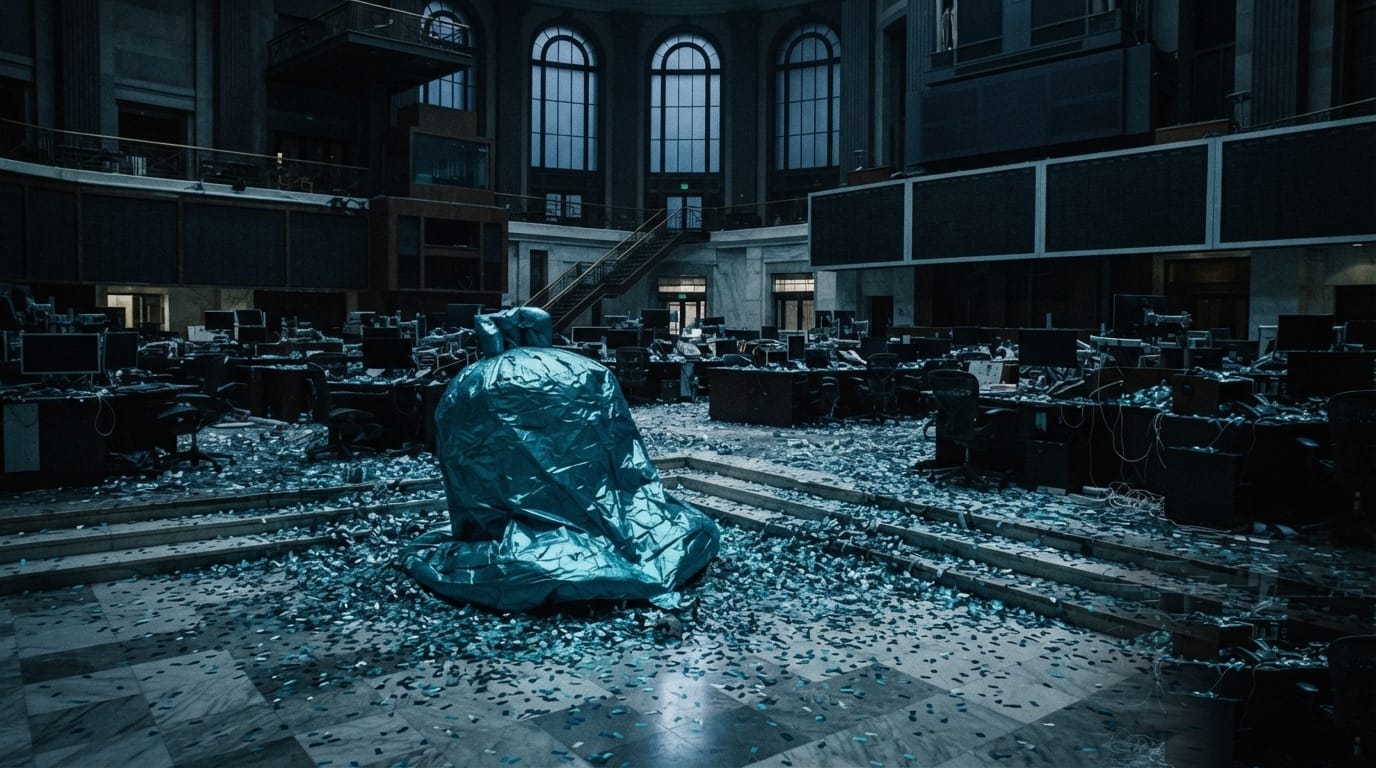
Going public was supposed to be crypto's graduation ceremony. Instead, the diploma turned out to be the top signal: nearly every crypto company that listed during the 2025 wave now trades like a distressed asset, and the class photo is a chart that only goes down.
The numbers are brutal even by crypto standards. Gemini opened at $37 last September and closed at $4.19 on July 7 — an 89% collapse. BitGo sits 77% below its January debut of $22.43. Bullish has surrendered roughly 71% from its $90 opening print. These are not obscure microcaps. They are a major US exchange, the industry's flagship custodian, and the exchange operator that owns CoinDesk.
Public equity was pitched as the mature way to own crypto — audited, regulated, wrapped in a ticker your retirement account could hold. The wrapper worked. It is the contents that fell 89%.
The wreckage has consequences upstream. CoinDesk reported on July 8 that the crypto IPO pipeline has stalled as capital rotates into AI and macro uncertainty weighs on risk appetite. Kraken's parent Payward paused its listing this spring. Grayscale, Consensys, and Ledger — three of the six "blockbuster" IPOs the industry spent January previewing — have all pushed back their preparations.
Sherwood put the cause more bluntly than any banker would: the appetite has been sold to AI. Every dollar of speculative institutional risk budget now has a competing bid from the datacenter buildout, and AI offers the same asymmetric upside story without the regulatory subplot.
A frozen window is worse than a shut one, because nobody announces it. Bankers keep drafting, lawyers keep billing, and the S-1s sit in drawers waiting for a quarter that keeps not arriving. Meanwhile every month of delay lets the down-round math compound quietly in the background.
It is a whiplash reversal from the victory lap. Twelve months ago, PitchBook was declaring that crypto had finally cracked the IPO ceiling and predicting 2026 would keep pace. The ceiling was cracked, all right. Companies went through it in both directions.
Blaming macro lets everyone off too easily. The deeper problem is what these stocks actually are. An exchange's revenue is a function of trading volume; volume is a function of retail mania; mania is cyclical. Buying exchange equity at a growth multiple in the euphoric quarter of a cycle means paying peak prices for peak earnings — the classic cyclical trap that has burned steel and semiconductor investors for a century.
Public markets figured this out with characteristic speed and cruelty. A crypto exchange stock, it turns out, is an amplified bet on trading volumes with none of the upside convexity of just holding the coins. When bitcoin slid from its highs to the low $60,000s, the coins fell double digits — and the equities built on their trading fees fell 70 to 89 percent.
None of this should have surprised anyone who watched Coinbase run the identical arc. It listed into the 2021 euphoria at a valuation that assumed the party was permanent, lost most of that value in the 2022 winter, and needed a full market cycle to see its debut price again. The class of 2025 simply compressed Coinbase's four-year round trip into ten months. The market had the template. It just needed fresh sellers who hadn't read it.
The exception proves the rule. The one crypto stock that rallied this month was Circle, which jumped when the OCC granted it a national trust bank charter. Investors are not rejecting crypto companies. They are rejecting cyclical volume businesses and paying up for regulated infrastructure with recurring, volume-agnostic economics. That is not anti-crypto sentiment. That is a market doing its job.
There is a quieter irony underneath the carnage. Crypto spent 2025 chasing Nasdaq's blessing while running, the entire time, a parallel capital formation system of its own — one that never closed.
Token launches remain the industry's native path from project to public, and the mechanics have matured far beyond the 2021 free-for-all. Vesting schedules and liquidity locks enforced by contract through services like Team Finance now do, in code, part of what lockup agreements and transfer agents do for an IPO. Curated launch platforms like the TrustSwap Launchpad exist because someone has to do the screening work an S-1 was supposed to signal. None of this makes a token launch equivalent to a public listing — there is no auditor, no quarterly call, no Delaware court. But the funding mechanism kept operating straight through a frozen IPO window, which is more than Kraken's bankers can say.
The honest concession: token markets have been punished this year too, and a locked contract cannot manufacture demand any more than a roadshow can. Capital is scarce everywhere in crypto right now. The difference is that one system is waiting on sentiment, while the other is waiting on sentiment plus an underwriting committee plus a listing window plus an S-1 review.
Because the reasons to list never went away. Venture investors who funded these companies a decade ago still need an exit that isn't a token unlock. Founders still want acquisition currency that a target's board will accept. And a public listing remains the one credential that lets a crypto company sell to counterparties who cannot legally touch anything without audited financials attached.
Circle made it look easy in 2025, and that memory will outlast this drawdown. Boards do not remember the 89% collapses of other people's stocks for long; they remember the one chart that went up. The moment two consecutive quarters cooperate, the bankers' phones will ring again — the pipeline is postponed, not repriced in anyone's head yet.
Windows reopen. They always do, and the backlog is real — Kraken, Consensys, Grayscale, and Ledger have not canceled, only postponed. When they return, expect them to return re-priced and re-positioned: less "own the revolution," more "own the toll road."
Because that is the lesson of the class of 2025, written in Gemini's chart. Public markets will fund crypto's plumbing — custody with contracts, stablecoin infrastructure with charters, payments rails with enterprise clients — at reasonable multiples, forever. What they will not do twice is pay thirty times peak-cycle revenue for a casino's slot-machine take.
The companies that listed at the top sold investors the volatility and kept the fees. The next crop will have to sell the fees and let investors buy the volatility on-chain, where it has always been cheaper. Crypto's future on Wall Street belongs to its utilities — and the casino, fittingly, is going to stay private.
Onuora Amobi ·
Onuora Amobi ·
Onuora Amobi ·
Onuora Amobi ·
Onuora Amobi ·

Onuora Amobi ·