Keplr's Seedless Wallets Were Sold as Non-Custodial. The Rescue Team Moved Them Anyway.
Onuora Amobi ·
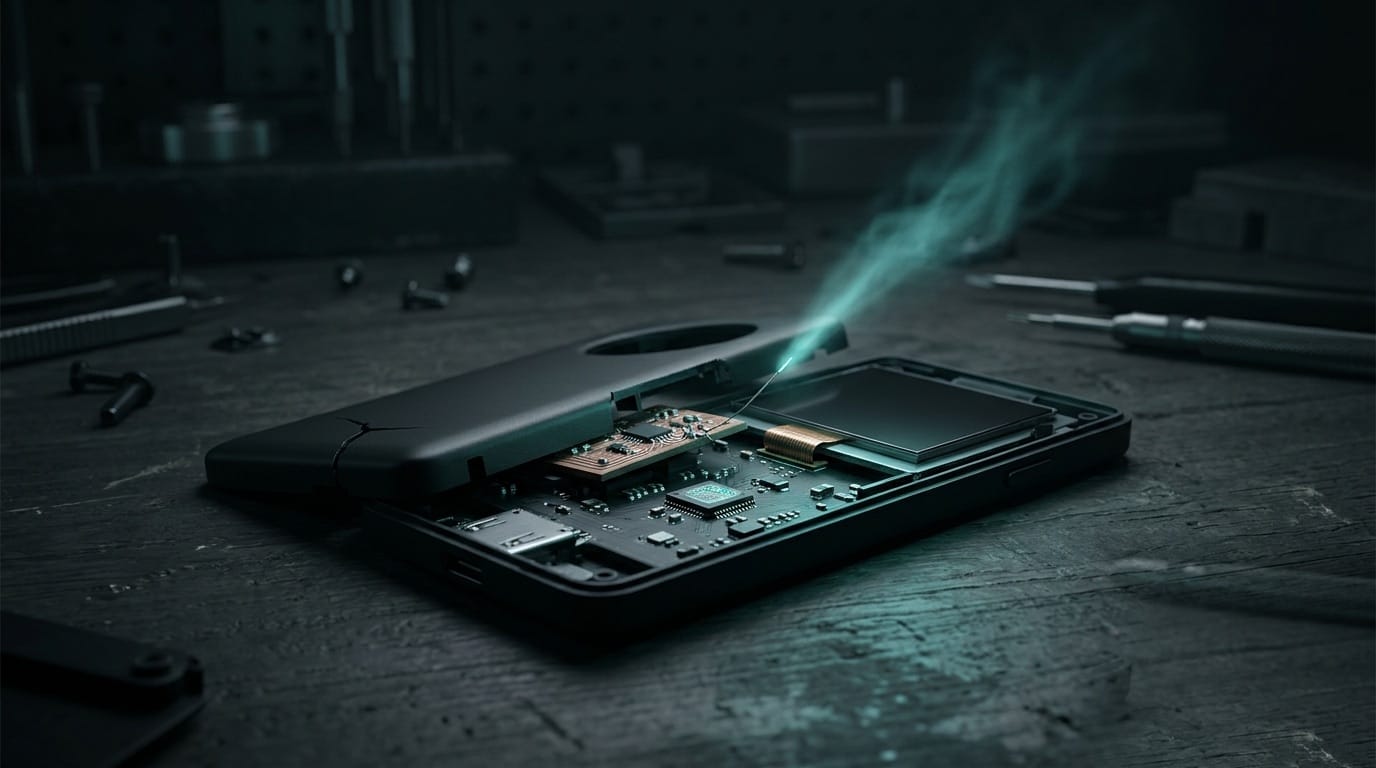
On October 28, a customer in Indonesia told Trezor that the Safe 5 they had bought in August from a reseller's Tokopedia store had something extra inside. Between the main board and the screen sat a second circuit board with a cellular module and an antenna. According to Trezor's first notice, it read whatever the screen showed, including the wallet backup, and sent it over a mobile network whenever the device was plugged in. By November 12, Trezor had confirmed three such devices, all bought from the same reseller, CryptoBilis, between August 20 and September 23.
Trezor was the second brand to say this. A month earlier, Ledger had confirmed an unauthorized hardware implant in a device sold through the same Malaysia-based retailer, after buyers in Southeast Asia reported drained wallets. Singapore's police put losses from at least two local cases at about $3.5 million.
Both companies opened with the same reassurance. The chip was fine. The firmware was fine. Nothing was broken. Every word of that is accurate, and none of it protected anyone.
A hardware wallet sells one promise: your private key lives on a tamper-resistant secure element and never leaves it. Ledger and Trezor have spent years hardening that chip, and by their own accounts, this attack never touched it. Ledger's response says plainly that there was "no flaw in Ledger's chip, operating system or servers." Trezor says its implant never altered the firmware or the secure element. It "only listens."
But a wallet has to show you your seed at least once. At setup, it puts 24 words on a little screen so you can write them down. If you ever restore, you type them back in. That is the moment the implant waits for. Ledger's description, as relayed by The Hacker News, is that a small microcontroller reads the display, decodes the words, and sends them out over LTE using a provisioned eSIM. Researchers cited by BleepingComputer found the parts list: an STM32 microcontroller, a 2-by-2-millimeter eSIM, a shielded LTE module, and a smaller battery to make room for it all.
The attackers didn't break the vault. They installed a camera pointed at the combination.
Both brands give users a way to confirm a device is genuine. On Trezor's Safe 3 and Safe 5, a unique certificate stored in the secure element is verified by Trezor Suite when the device connects. Ledger has its Genuine Check. These are good tools, and in this case they returned a clean result, because the thing they verify was in fact clean.
Ledger's own support documentation, quoted by BleepingComputer, warns that Genuine Check cannot detect added implants as long as the original secure element is intact. That is not a bug in the check. It is the limit of what a cryptographic attestation can prove. A chip can sign a message saying it is the real chip. It cannot tell you who else is in the box with it.
Trezor's advice on physical self-inspection is no more comforting. A buyer noticed the tampered unit weighed slightly more than expected, but Trezor's notice says weighing is not a reliable test, and it recommends no at-home method at all. If the user can't detect it and the software can't detect it, the device is only as trustworthy as the last person who held it.
Trezor moved fast. Firmware 2.13.1, released November 11, stops the implants it found from capturing anything, which Trezor says makes "the current batch useless." Ledger's devices, by its account, needed no patch at all, since nothing in its code was at fault.
Read the phrasing closely, though. The update targets the implants Trezor has found. It works because the company now knows how this particular board listens. The next batch, built by a group that has already adapted one design from Ledger's display to Trezor's, does not have to listen the same way. Trezor is also blunt about the other limit: the update "can't protect a wallet backup that was captured before it." Anyone who set up a tampered device before the patch has to treat that seed as gone and move everything to a new one.
A software patch is a sensible response. It is not a structural one. The structural responses are the ones both companies announced next.
Trezor has cut roughly 80% of its reseller network, a move first flagged on October 13, before the first implant report even arrived. Removed partners can sell existing stock until January 1, 2027. Those who remain face stricter rules on how devices are sourced, stored, and who can touch them. Its standing advice for the next purchase is to buy directly from trezor.io.
Ledger went further into retail mechanics. It asked authorized resellers and distributors to suspend sales in Southeast Asia and Hong Kong, and it now tells stores that Ledger products should no longer sit on shelves or displays. Stock stays in the back room until a buyer pays. Returned units can never be resold.
That is an industry quietly redrawing its own threat model. For a decade the pitch was that the hardware made the supply chain irrelevant: even if someone tampered with the box, the secure element would refuse to leak. Now two of the biggest names in self-custody are writing rules about which shelf a box may sit on.
The industry's best case deserves a fair hearing. The cryptography held. The losses, while ugly, are concentrated: Singapore police counted two cases, and Trezor says none of its three affected owners lost funds. Ledger calls this "a localized distribution attack," not a systemic one, and its teams opened devices bought in markets including Germany and found every one clean. Buy direct from the manufacturer, the argument goes, and this whole class of attack disappears.
Mostly, maybe. But "buy direct" is advice for people who live where direct shipping is fast, cheap, and free of import headaches. Southeast Asia is exactly where marketplace resellers on Tokopedia and Shopee fill that gap, and it is where this group operated. Researchers at Tibane Labs also reported a third implant variant on a unit bought on Amazon Japan from a China-based seller, according to The Hacker News. The attackers bought genuine devices over many months, Ledger says, opened them, and fed them back into normal retail. A distribution network is not a single reseller you can delete. It is every hand a box passes through.
And the losses may be larger than the official counts. A pseudonymous investigator cited by The Hacker News put the drained total at more than $86 million. Ledger has not confirmed that number, and has said it has not confirmed the total number of affected users or value lost. Treat it as unverified. The fact that nobody can yet say how big this was is itself part of the story.
The real lesson is not that hardware wallets failed. It is that "the key never leaves the chip" was always a narrower promise than buyers heard. The seed leaves the chip at least once, on a screen, in the open, and whoever controls the space between that screen and your eyes controls your money. Ledger and Trezor have both now admitted, through their actions if not their headlines, that the box matters as much as the silicon.
The next generation of wallets will be judged less by the chip they advertise than by whether you can prove, on arrival, that nobody opened the case.
Onuora Amobi ·
Onuora Amobi ·
Onuora Amobi ·
Onuora Amobi ·
Onuora Amobi ·

Onuora Amobi ·