
The CFTC Wrote a Rulebook for Crypto Leverage. Buying Bitcoin Still Has No Federal Referee.
Onuora Amobi ·

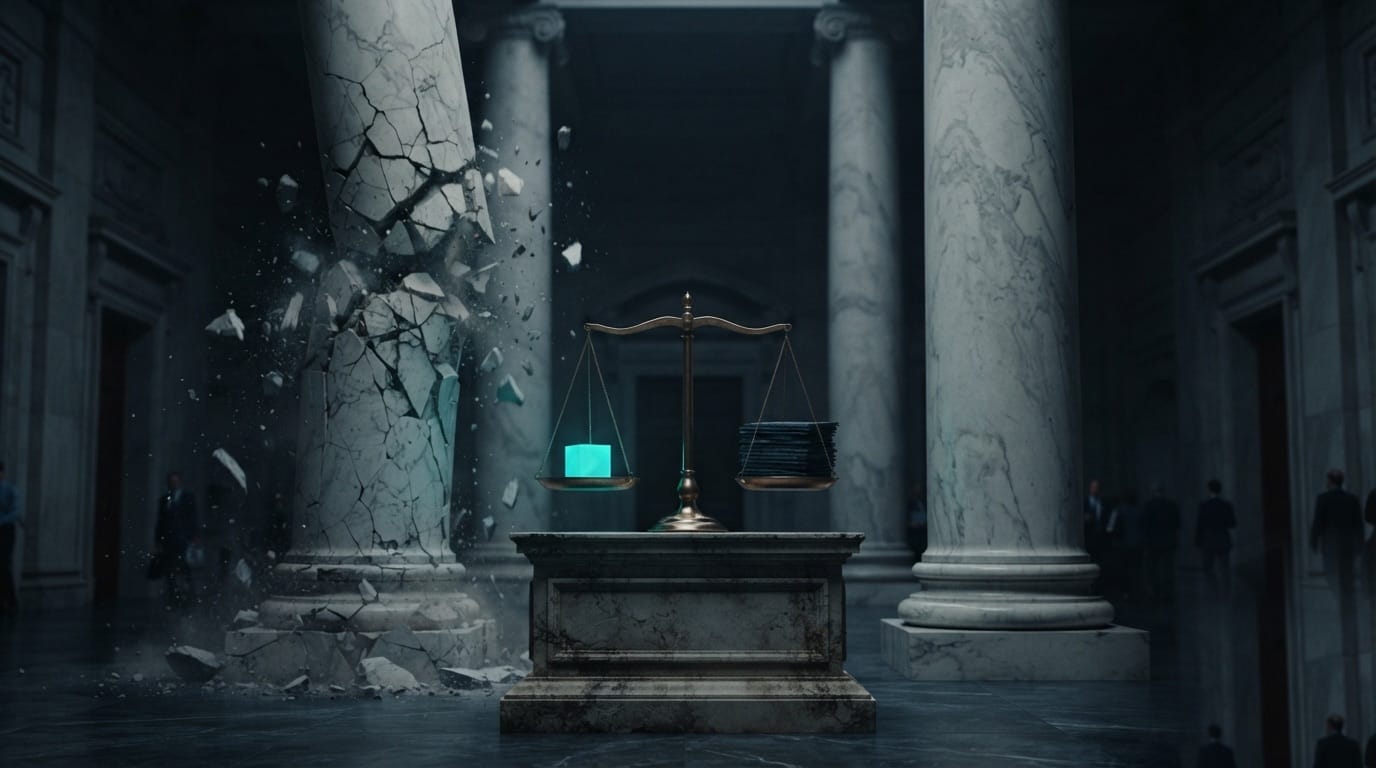
The most important crypto bill in American history is probably dead this year, and the industry's response has been to schedule a meeting.
Galaxy Research cut its odds of the CLARITY Act becoming law in 2026 to 10 percent on August 14, down from 75 percent earlier in the year. Alex Thorn, who runs research at the firm, called it "circus trick" territory and said that for the bill to pass now, "we need magic."
Three days later, President Trump is expected at the Eisenhower Executive Office Building on Wednesday afternoon with the chief executives of Coinbase, Ripple, Gemini, Robinhood, Polymarket and Kalshi. SEC Chairman Paul Atkins is going. CFTC Chairman Michael Selig is going. The session is a warm-up for the CFTC's first Innovation Advisory Committee meeting the following day.
Read that sequence carefully. The statute stalls, and the substitute is an advisory committee.
CLARITY didn't lose a vote. It ran out of floor time.
The Senate calendar compressed, ethics provisions governing officials' personal crypto holdings deadlocked, and bank lobbying chewed through whatever momentum survived the summer. Senators Thom Tillis and Ruben Gallego sent a bipartisan ethics compromise to the White House on July 30. It has not broken the logjam.
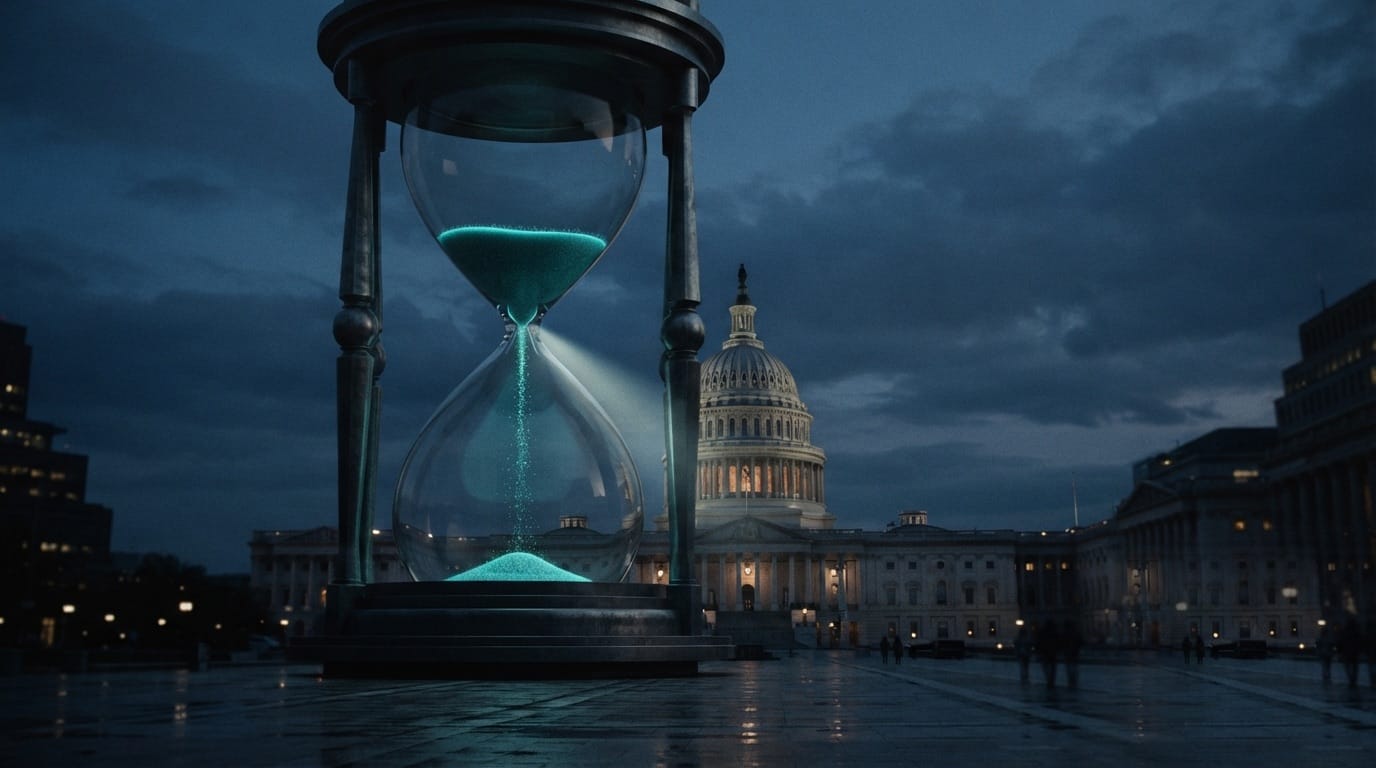
None of that is a judgment on the policy. It's a judgment on the queue. Which is somehow worse — a bill defeated on the merits can be rewritten, while a bill starved of calendar just waits for a session that may never be less crowded than this one.
Into the gap step the regulators. The SEC is preparing what people around it call Reg Crypto, paired with an innovation exemption that would let certain onchain activity operate outside the full registration regime. The CFTC is standing up its committee. Between them they could deliver most of what CLARITY promised: a workable split of jurisdiction, a path to registered trading, a definition of when a token stops being a security.
Faster than Congress. Absolutely. Also revocable by a single vote of a five-member commission whose composition changes with every administration.
That's the trade the industry is being handed and mostly not discussing out loud. A statute is durable and slow. A rulemaking is quick and provisional. Any founder who builds a compliance architecture around Reg Crypto in 2027 is building it on ground that the 2029 commission can move.
Look at the guest list again. Coinbase, Ripple, Gemini, Robinhood, Kalshi, Polymarket. Public companies and near-public companies, all with general counsel, all with lobbying budgets, all large enough to survive an ambiguous rule by simply hiring around it.
The firms that actually need CLARITY are the ones nobody invited. A five-person team launching a token in Lisbon has no idea whether its distribution triggers US securities law, and it cannot afford the memo that would tell it. That team's real regulator is not the SEC. It's whatever its lawyers can approximate from enforcement actions filed against other people.
Regulatory ambiguity is a fixed cost. Fixed costs are regressive. The longer the void lasts, the more the American crypto industry consolidates into the handful of firms that can afford to be uncertain — which is, conveniently, the same handful sitting down on Wednesday.
Projects don't stop shipping because Washington can't schedule a vote. They just get more careful about the parts they can control.
That mostly means proving intent through mechanics rather than disclosures. Locked liquidity and vesting schedules enforced by a contract rather than a promise — the sort of thing Team Finance exists to handle — do not resolve a securities question, and no one should pretend otherwise. What they do is remove the specific behaviors that draw enforcement attention in the first place: the silent unlock, the treasury that moves at 2 a.m., the team allocation that was never really vested. Structure a launch through TrustSwap Launchpad and the same logic applies. You cannot buy legal clarity. You can eliminate the facts that make ambiguity dangerous.
That's a defensive posture, not a strategy. It's also the only one available until someone in the Senate finds an afternoon.
The most interesting names on Wednesday's list are Kalshi and Polymarket, and the CFTC agenda reportedly covers prediction markets and AI agents alongside crypto.
Prediction markets spent years in regulatory purgatory and emerged not through legislation but through a court ruling and a friendly commission. They are the working proof that the agency route can produce real markets fast. They are also the working proof of what that route costs: their legal standing rests on interpretations that a different CFTC could revisit, and everyone building on them knows it.
Crypto is about to inherit the same bargain. Speed now, fragility later.
The industry has spent five years insisting it wanted rules, not enforcement. It's about to find out whether it meant rules — the kind that outlast an election — or merely permission.
Onuora Amobi ·
Onuora Amobi ·

Onuora Amobi ·

Onuora Amobi ·
Onuora Amobi ·

Onuora Amobi ·