
Nobody Regulated the Rug Pull Away. The Launchpads Competed It Away.
Onuora Amobi ·
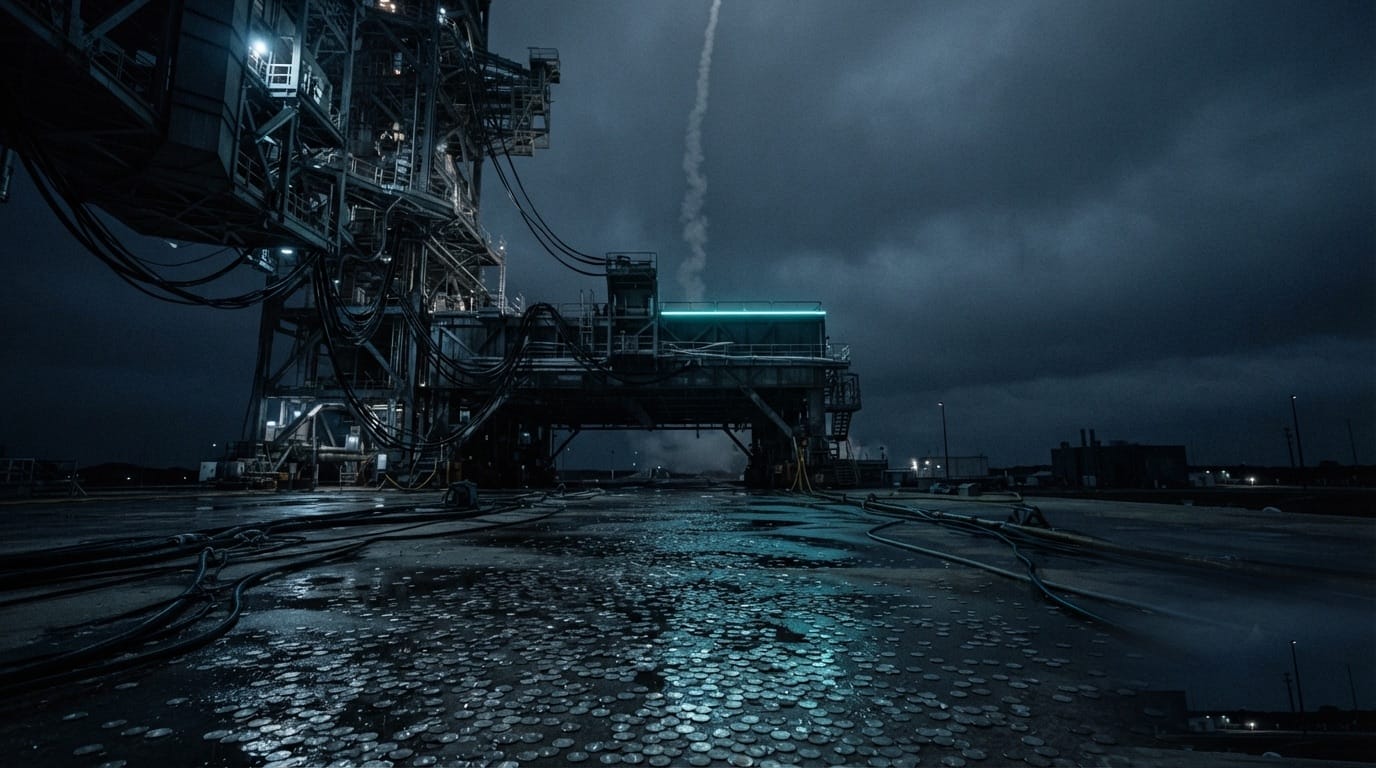
The most profitable launchpad in crypto, measured by daily fees, was not Pump.fun. For one week in July, it was a platform almost nobody had heard of a month ago — and it has already stopped answering the phone.
Noxa, the dominant memecoin launchpad on Robinhood Chain, earned an estimated $12 million in fees in roughly a week before abruptly halting new token launches on July 11. Two days later its website went dark. The team blamed Cloudflare. Then it announced the domain would redirect to ENS services, that creator earnings could be withdrawn, and — late Tuesday night — that it would stop collecting fees entirely, handing 100% of transaction revenue to creators.
That sequence is not a wind-down. It is a shrug. And the market it leaves behind is instructive.
Robinhood Chain went live on July 1. By the second week of the month, Noxa had launched more than 60,000 tokens, captured roughly 75% of all deployments on the network, and pulled 267,642 unique wallets onto a chain that was days old.
On its best day, Noxa took in $2.33 million in fees. The Solana incumbent it was compared to — the platform that has minted eleven million tokens and defined an entire market cycle — managed $575,500 that same day.
Four times the revenue of the most successful launchpad in history, on a chain younger than a carton of milk. Then, silence.
Noxa's flagship asset was $CASHCAT, a cat-themed memecoin that ran to a $226 million market capitalization before the platform stalled. Within 24 hours of the shutdown news, it had dropped more than a third.
Holders now face a question the industry keeps refusing to answer: what happens to a token when the platform that birthed it disappears? The contract still exists. The liquidity still sits wherever it sits. But the interface, the fee routing, the roadmap, the implicit promise that someone is minding the store — gone.
Nothing about this was illegal, as far as anyone has shown. That is precisely the problem.
A fee-extraction launchpad has one economic loop: more launches, more volume, more fees. Token quality is not in the loop. Longevity is not in the loop. Noxa itself cited "low-quality tokens flooding the platform" as a reason for halting — an arsonist complaining about the smoke.
When your revenue peaks on day nine, the rational move is to bank the $12 million and step away. The incentive structure did exactly what it was built to do.
The counterweight has existed for years, and it is unglamorous: verifiable commitments that outlive the platform. Locked liquidity and team-token vesting through services like Team Finance mean a project's core promises are enforced by a contract, not by whether a website resolves. Curated launch venues like the TrustSwap Launchpad filter at the point of entry instead of monetizing the flood. Neither mechanism makes a token good. Both make abandonment expensive, which is the only deterrent that has ever worked in this industry.
The objection writes itself: locks and vetting are friction, and memecoin culture runs on frictionlessness. True. But 267,642 wallets just learned what frictionless costs when the platform side of the trade wants out. Friction is a fee you pay to know the other party stays at the table.
The sharpest irony sits one layer down. Robinhood built its chain for tokenized real-world assets — stocks on-chain, the respectable stuff. Those assets account for just $12.66 million in market cap on the network. At its peak, CASHCAT alone was worth twelve times the chain's entire stated purpose.
Chains do not get to choose their culture. Users choose it, and users chose the cat. Any network that launches with permissionless deployment should now assume its first economy will be memecoins, and should decide in advance what happens when the biggest venue on that economy walks off. Robinhood Chain never made that decision. Other launchpads are already circling to absorb the volume, which means the cycle restarts with new branding and the same loop.
Would rules have helped? Perhaps at the margins. But no regulation on any drafting table addresses a platform that simply stops. The CLARITY Act fights are about exchanges and issuers, not about a two-week-old fee router with an anonymous team.
The fix is structural, and it is boring: make the commitments self-executing before the first token mints. Until launch infrastructure carries its own survival guarantees, every new chain will get its own Noxa — faster, larger, and better at leaving.
The next one is probably deploying right now. The only open question is which chain's grand institutional vision it will be wearing as a costume when it goes.
Onuora Amobi ·
Onuora Amobi ·
Onuora Amobi ·
Onuora Amobi ·
Onuora Amobi ·
Onuora Amobi ·