
Circle Froze $823 Million for Binance. For a French Bank, It Froze Nothing.
Onuora Amobi ·
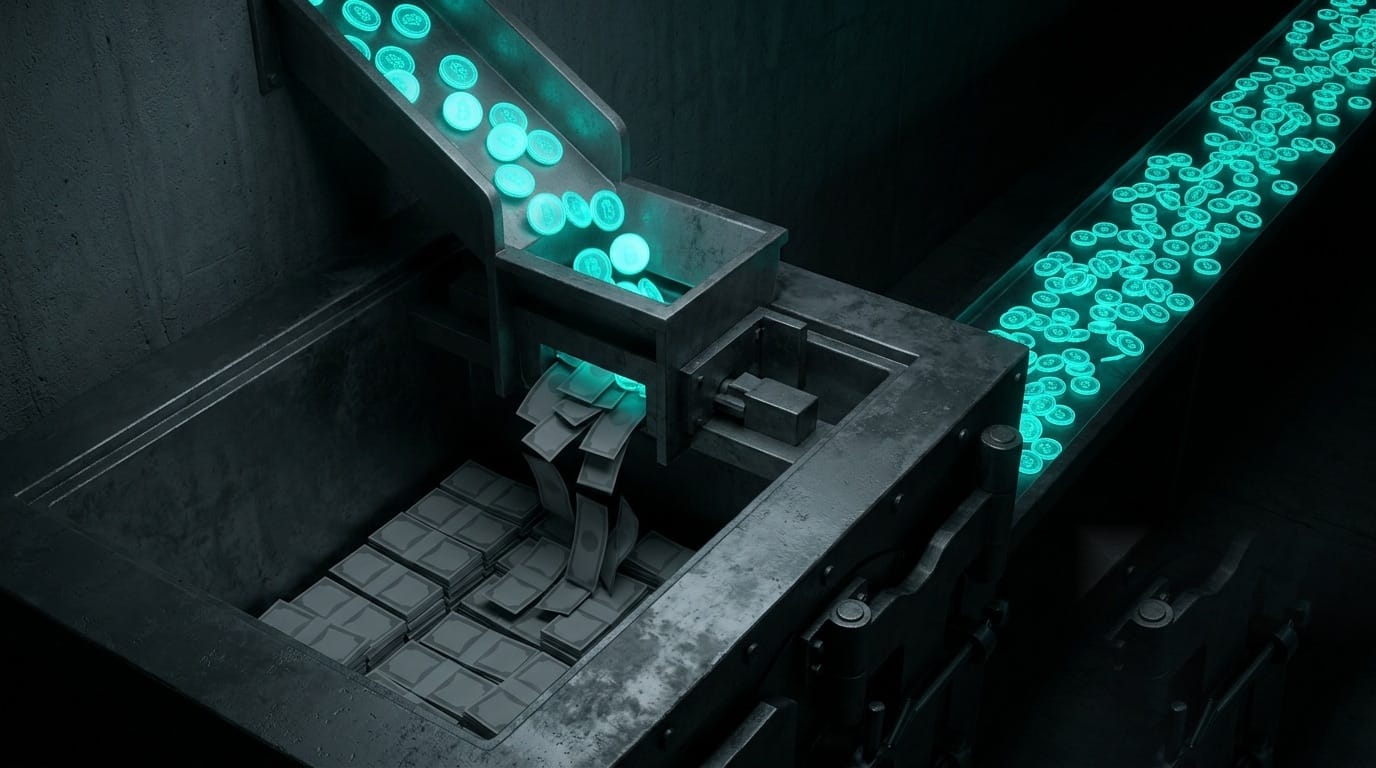
On Monday, November 9, PNC Bank told its corporate and institutional clients they could start getting paid in stablecoins. The Pittsburgh-based bank announced that eligible clients can now receive USDC on the Ethereum blockchain, with the plumbing "powered by Coinbase Payment products." It is a pilot, offered "on a limited basis to eligible clients," and PNC published no volumes, caps or fees.
Read one sentence further and the shape of the product becomes clear. The USDC is "automatically converted 1-to-1 to U.S. dollars and deposited into a designated PNC deposit account." The client never holds a stablecoin. The bank never holds one either, at least not for long. The token arrives, gets swapped, and what lands in the account is the same deposit dollar PNC has always booked.
A stablecoin, held for a second.
That is not a criticism of PNC. It is the most honest description yet of how American banks are adopting this technology: as an inbound pipe, not a balance, and almost entirely for one coin on a short list of chains. Meanwhile, the place where stablecoins actually work as money for merchants runs on a different token, on a different chain, that none of these bank products touch.
The same week PNC flipped its switch, Glassnode and the crypto payment processor NOWPayments published a report called "Stablecoins in Commerce," the first installment of Glassnode's "Money in Motion" series. Its numbers, as reported by Crypto Briefing, describe a merchant economy that looks nothing like a Pittsburgh treasury desk.
Tether's USDT accounted for 66.92% of stablecoin transaction volume on NOWPayments in the first half of 2026. In e-commerce marketplaces specifically, USDT on the Tron network alone made up 54.58% of successful payments. SaaS and e-commerce businesses grew to 55.54% of the processor's classified partners in January through July, up from 48.26% a year earlier. The people actually selling things for stablecoins are online merchants, and they are mostly being paid in Tether on Tron.
This is not a new pattern, and it has been visible on-chain for years. As far back as May 2025, Tether's own transparency data showed $71.4 billion of USDT on Tron against $72.8 billion on Ethereum, with Tron having led Ethereum for most of the stretch from July 2022 to November 2024. Tron's appeal was never ideology. Transfers are cheap, wallets are everywhere in emerging markets, and the exchanges and OTC desks that serve those markets standardized on it long ago.
PNC's product does not accept that money. Its pilot takes USDC, on Ethereum, through Coinbase. That is a defensible choice for a regulated US bank, and probably the only one available. But it means the first big-bank stablecoin receivables product in America is built around a token that, in the one merchant dataset published this week, is the challenger and not the incumbent.
Visa is the clearest example of a payments giant genuinely moving money on stablecoin rails. When it launched USDC settlement in the United States on December 16, 2025, Cross River Bank and Lead Bank began settling with Visa in USDC over Solana, with "7-day settlement windows" instead of the "traditional five-business-day window." At the time, Visa put its stablecoin settlement at more than $3.5 billion annualized.
The growth since then is real. The Block reported in September that Visa's stablecoin settlement had passed a $20 billion annualized run rate, up more than 15x, with more than 160 stablecoin-linked card programs live. By late October, Crypto Briefing put the figure at $25 billion, across five supported stablecoins (USDC, USDG, EURC, PYUSD and SBC) on ten blockchains. It also described a September test in which Lloyds Corporate Markets Jersey settled $750,000 in USDC through Visa over a weekend, in under an hour.
Look at that list of five coins again. USDT is not on it. The largest stablecoin in the world, and the one that dominates merchant marketplaces, is absent from Visa's settlement menu. What Visa has built is a faster back office for its own banks and card issuers, and an impressive one. What it has not built is a bridge to the money that already circulates.
The reason is not mysterious. The GENIUS Act set the rules for which stablecoins American institutions can treat as safe, and USDT sits on the wrong side of the line for now. A KuCoin summary of CoinDesk reporting from July lays out the bind: foreign issuers eventually face OCC registration, reserves held at US institutions and "comparable" home-country supervision, and roughly one-quarter of USDT's backing sits in assets such as bitcoin, precious metals and loans that would not meet the law's reserve standards. How the three-year transition, which runs to July 2028, applies to a foreign issuer like Tether remains contested.
Tether's answer was to build a second, compliant coin rather than reform the first one. USAT, issued through Anchorage Digital Bank, grew to over 140 million tokens in April from about 22 million in March, backed by cash and Treasury repo held in segregated trust accounts. That is fast growth from a tiny base. It is also a rounding error next to a USDT float that had already reached $149.4 billion back in May 2025. The compliant version of Tether exists. The money did not move into it.
So the market has split into two tiers. On top: USDC and a handful of regulated coins, accepted by Visa and now PNC, converted to deposits on arrival, used by treasury teams to move money between institutions faster. Underneath: USDT on Tron, used by merchants, traders and households in places where a dollar account is hard to get, and which no American bank product is designed to receive.
The fair counterargument is that this is exactly how it should work. PNC's job is to serve its corporate clients safely, not to chase offshore merchant volume. A bank that converts USDC to deposits on arrival is limiting its balance-sheet risk, keeping its regulators comfortable and still giving clients what they asked for, which, per PNC, is "faster access to funds and greater efficiency for cross-border transactions." USDC is also gaining. The Glassnode and NOWPayments data showed USDC transaction counts up 209.02% year over year, while USDT volume on the processor fell 14.99%. Maybe the regulated coin wins in time, and the banks are simply early.
All of that can be true and the thesis still holds. Instant conversion means the bank adoption, as it stands, does almost nothing for the stablecoin as money. Nobody holds the token, nobody spends it, and nobody's working capital changes form. PYMNTS made the same point in its coverage of PNC: receiving money "is not the same as having spendable working capital." What the banks have adopted is the settlement speed, which is valuable, and nothing else.
And the USDC growth figure is a count of transactions, not dollar value, from one processor. It shows the regulated coin gaining customers. It does not yet show the merchant economy moving over. Until a US bank will take USDT on Tron from a marketplace seller in Lagos or Manila, or until those sellers switch coins on their own, "banks embrace stablecoins" will describe a set of institutions talking to each other on faster rails.
The next real milestone is not another bank pilot. It is the first one that lets a client keep the stablecoin after it arrives, or the first one that accepts the coin its customers' customers are actually using. PNC's pilot did neither. Watch for whoever does.
Onuora Amobi ·

Onuora Amobi ·

Onuora Amobi ·

Onuora Amobi ·

Onuora Amobi ·

Onuora Amobi ·