Ethena Pulled Its Unlock Forward 17 Months. Nobody Will Say How Big It Is.
Onuora Amobi ·

A token's most dangerous holder is often its own cap table. Not the shorts, not the exchange, not some whale on the other side of the trade — the founders, funds, and early buyers whose tokens were locked when prices were rising and are set to release exactly when they're not.
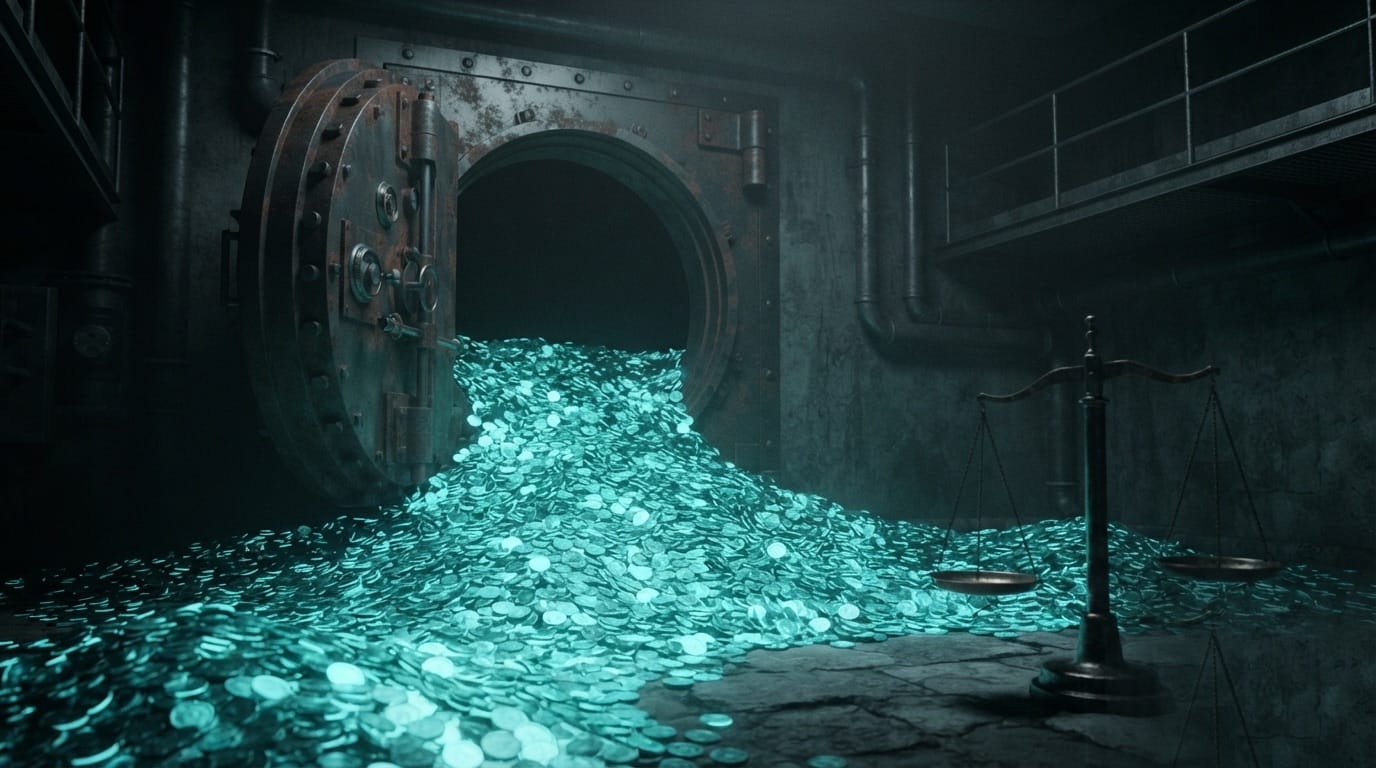
Token unlocks are the quiet mechanism behind a lot of unexplained selling, and July 2026 is a heavy month for them. More than $1.8 billion in tokens came unlocked across the market in the four weeks bridging June into July, according to Tokenomist data — a wave of supply arriving on schedules that were drawn up in a very different mood.
The mechanics are almost cruel in their timing. A project raises during a bull run. To reassure buyers that insiders won't dump on day one, it locks team and investor allocations behind a cliff — commonly one year of nothing, then a long stretch of monthly releases. It's a promise made to a rising chart.
The 2023 and 2024 cohort is now hitting those cliffs. And the market they're unlocking into is not the one that set the terms. Bitcoin spent the first half of 2026 sliding from above $93,000 to a 21-month low near $60,000 in late June before clawing back to $63,000. Altcoins fared worse. So the supply hits a market with thinner bids, and the schedule doesn't blink.
Take Plasma's XPL. Tokens sold to U.S. participants carried a 12-month lockup that fully releases on July 28, 2026 — roughly 500 million tokens becoming tradable in a single window, on a date fixed a year ago with no clause for "unless the market is ugly." XPL isn't alone. July's unlock calendar also carries scheduled releases for Pump.fun's PUMP and Worldcoin's WLD, each adding float into an unforgiving tape.
Here's the honest counterpoint, because the doom framing gets overdone. An unlock is not automatically a sell. Plenty of insiders hold. Some tokens are already priced for the release, the market having front-run the date for weeks. And a large linear vest that drips out monthly is a very different animal from a single cliff that dumps a slug of supply in one afternoon.
But the fear is rational even when the selling isn't guaranteed. Traders can't see intent. They can only see the schedule and the size, and they position for the worst case. That anticipation becomes its own force — price weakens ahead of the date whether or not a single insider actually sells. The unlock doesn't have to be a dump to move the chart. It only has to be visible and large.
Which is the real lesson buried in a heavy month: in crypto, supply is a design decision, and most retail buyers never read the design before they buy.
You can't argue a project out of its unlock date. What you can do is know it before you're exposed to it. That's the unglamorous case for on-chain locks and published vesting.
When a team locks its tokens through a verifiable mechanism, the schedule stops being a rumor and becomes a fact anyone can check. Services built for this — Team Finance among them — hold liquidity and team allocations in time-locked contracts, so the release calendar is auditable on-chain rather than buried in a pitch deck nobody kept. A lock doesn't make a token go up. It does make the one variable that reliably wrecks retail — surprise supply — something you can see coming.
That distinction is worth more in a downturn than a bull run. When everything's rising, an unlock gets absorbed and forgotten. When bids are thin, the same release lands like a rock in a shallow pond, and the holders who didn't check the schedule are the ones who find out the hard way.
Most of what traders stare at is noise dressed as signal — sentiment gauges, funding rates, the mood of a given afternoon. Unlock schedules are different. They were written into the tokenomics at launch, they're public, and they don't revise themselves to fit the narrative. The date is the date.
That makes the back half of 2026 unusually legible for anyone willing to look. The cliffs from the last cycle's raises are mapped out, month by month, well in advance. The projects that treated vesting as a real commitment — long locks, transparent releases, insiders aligned with holders — will wear these months better than the ones that wrote generous unlocks for themselves and hoped no one would notice until the tokens were already moving.
The bull market mailed every project a bill. Some addressed it honestly and some pretended it would never arrive. This month, and the several after it, the difference stops being theoretical — and the market gets to see exactly who was building for the top and who was building to last.
Onuora Amobi ·

Onuora Amobi ·

Onuora Amobi ·

Onuora Amobi ·

Onuora Amobi ·

Onuora Amobi ·